

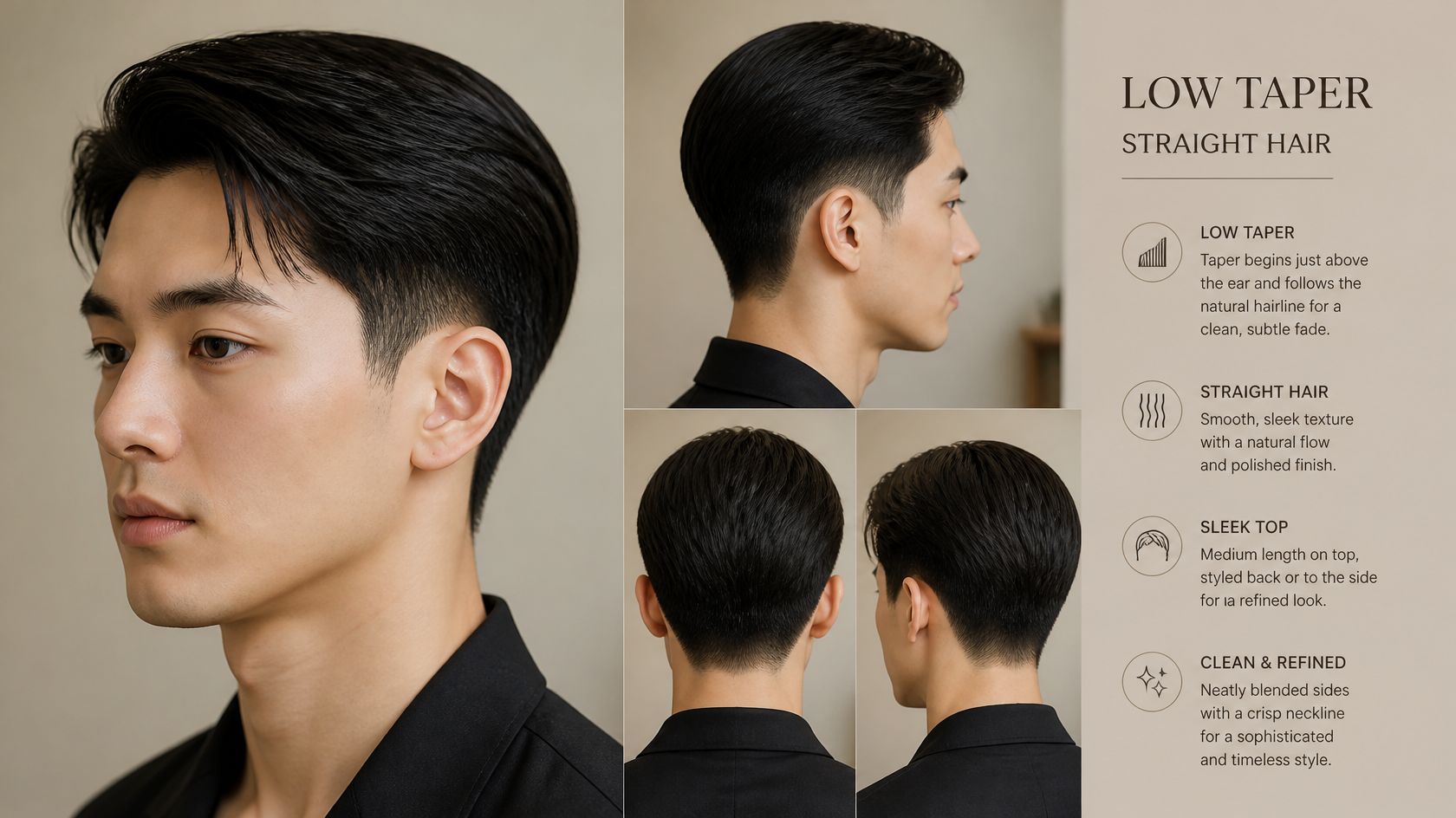
A low taper fade for boys with straight hair is one of the best ways to achieve a clean, modern, and stylish look in 2026. This haircut combines neatly tapered sides with a natural top, making it suitable for school, casual outings, family events, and everyday wear. Whether you prefer a textured top, a soft fringe, or a classic middle part, a low taper fade can be customized to match your hair length, face shape, and personal style.
One of the biggest advantages of this haircut is its versatility. Straight hair can look sharp and polished, but it can also appear flat without the right cut and styling. A low taper fade adds definition around the ears and neckline while allowing the top to retain its natural movement.
In this guide, you will discover the best low taper fade styles for boys with straight hair, how to choose the right variation, what to tell your barber, and how to maintain your haircut at home.
What a Low Taper Fade Is
A low taper fade is a haircut in which the hair gradually becomes shorter around the sideburns and neckline, creating a clean and subtle transition. Unlike a high fade, which starts much higher on the head, a low taper keeps most of the sides and back relatively full.
The result is a balanced haircut that looks neat without removing too much hair. The top can be left short, medium-length, textured, or parted according to your preference.
For boys with straight hair, this haircut works particularly well because the clean edges complement the smooth texture of the hair. It can also be paired with different hairstyles without requiring a complete change to the overall cut.
A typical low taper fade includes three main features:
- Low taper: Gradually shortened hair around the temples, sideburns, and neckline.
- Natural top: Hair left longer on top for styling flexibility.
- Clean edges: Carefully shaped areas around the ears and neck for a fresh appearance.
You can ask your barber for a subtle, natural taper or a sharper fade depending on how noticeable you want the contrast to be.
Why It Suits Straight Hair So Well
Straight hair is naturally smooth and tends to lie flat, making the shape of a haircut especially important. A low taper fade creates contrast between the shorter sides and the longer top, helping the hairstyle look more structured.
Here are some reasons this haircut suits straight-haired boys so well.
1. It creates a clean shape. The tapered sides remove unnecessary bulk around the ears while keeping the haircut balanced.
2. It makes styling easier. You can brush your hair forward, sweep it sideways, create a middle part, or add texture without changing the fade.
3. It looks good with different hair lengths. Whether your hair is short or medium-length, the low taper can complement the natural shape of your hairstyle.
4. It offers a balance between trendy and classic. The haircut looks fashionable without being as dramatic as some high-fade styles.
5. It can suit school and everyday life. A conservative low taper with a modest top is often easy to maintain, although school grooming rules vary.
For the best result, your barber should consider your hair density, natural growth direction, and whether your straight hair tends to fall forward or split naturally in the middle.
The Best Styles in 2026
In 2026, low taper fades remain a versatile choice for boys who want a modern haircut without an overly aggressive look. The best style depends on how much length you want to keep on top and how much time you are willing to spend styling it.
Here are some popular variations to consider.
1. Classic Low Taper Fade
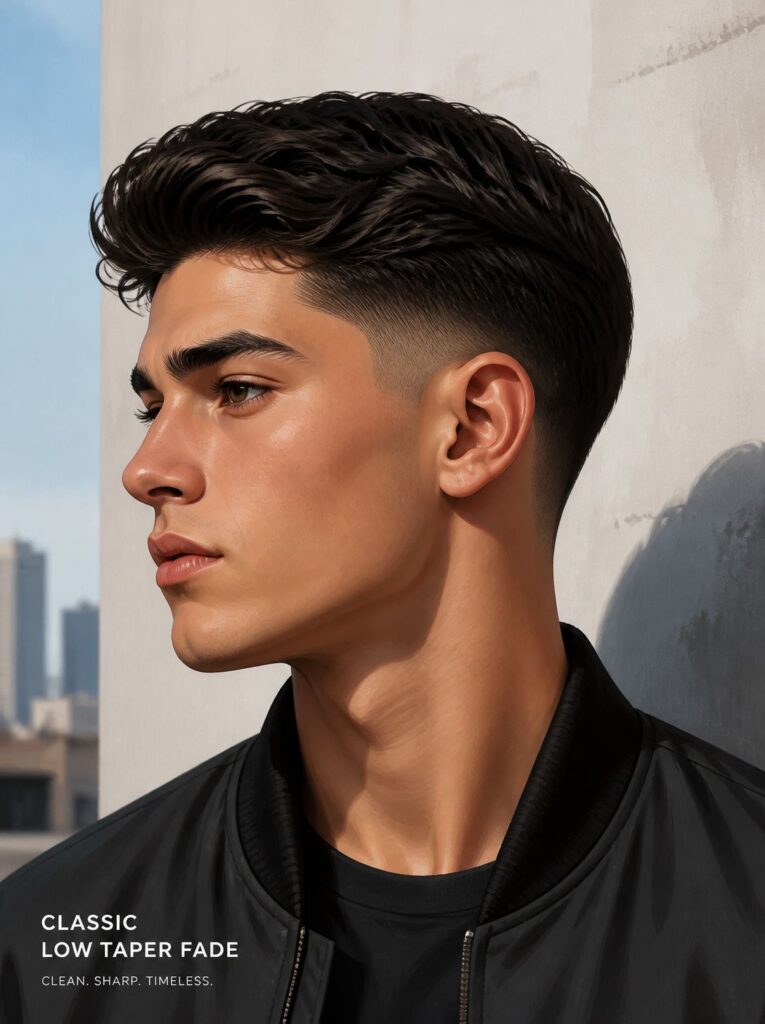
The classic version features neatly tapered temples and a clean neckline, with the top kept relatively simple. It is an excellent option for boys who prefer a timeless, low-maintenance haircut.
You can brush the top forward, slightly to the side, or naturally upward. This style works well for school, casual occasions, and family gatherings.
2. Low Taper Fade With a Textured Top
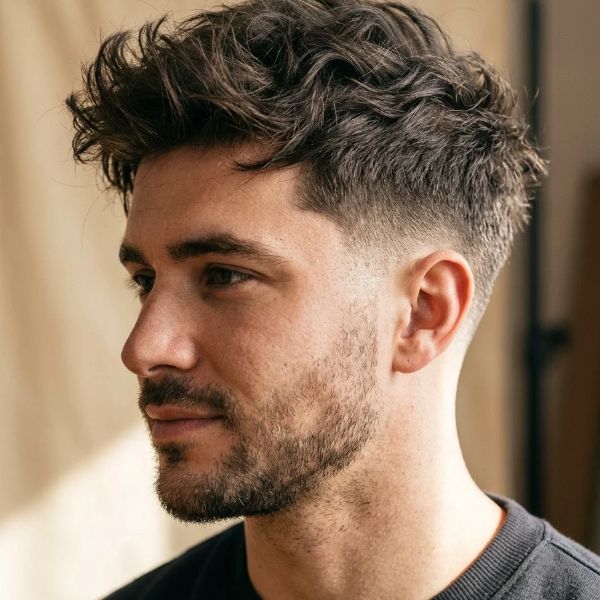
A textured top adds movement and dimension to straight hair. The barber creates different lengths through the top so the hair does not look completely flat or uniform.
This style is ideal for boys who want a modern appearance with a slightly messy finish.
3. Low Taper Fade With a Fringe

A fringe allows the front of the hair to fall naturally across the forehead. Depending on the length, it can look soft and casual or more defined and fashion-forward.
It is a good choice for boys who prefer styling their hair forward rather than brushing it backward.
4. Low Taper Fade With a Middle Par

A middle part divides the top into two sections, creating a balanced appearance. The hair can fall naturally on both sides, producing a relaxed look that works especially well with medium-length straight hair.
This style generally requires more length on top than a traditional short haircut.
5. Low Taper Fade With a Side Part

A side part offers a neat, polished finish. It is suitable for boys who prefer a classic hairstyle that looks organized without needing excessive styling.
A little lightweight styling cream can help keep the part in place.
6. Short Low Taper Fade
If you want a simple haircut that takes very little time to style, a short low taper fade is a practical option. The top remains short, while the sides and neckline receive a subtle taper.
It is particularly useful for boys who prefer a tidy appearance and do not want to spend much time in front of the mirror.
Low Taper Fade With a Textured Top
The textured top is one of the strongest choices for boys with straight hair because it helps create the appearance of movement and volume.
Straight hair can sometimes look flat when it is cut to one uniform length. Adding texture gives the top more definition while the low taper keeps the overall haircut clean.
For this style, ask your barber to keep enough length on top to create separation between the strands. The exact length depends on your hair thickness, head shape, and preferred finish.
How to style it at home:
- Start with clean, slightly damp hair.
- Apply a small amount of lightweight styling cream or matte paste.
- Use your fingers to lift and separate sections of hair.
- If you want more volume, blow-dry on a low or medium setting while directing the hair upward.
- Finish with a small amount of product rather than making the hair stiff.
Avoid using too much product. Straight hair can become greasy or heavy when overloaded with wax, paste, or cream.
For boys who want a trendy but natural appearance, this variation offers an excellent balance between texture and a clean finish.
Low Taper Fade With a Fringe
A low taper fade with a fringe is a stylish option for boys who like wearing their hair forward. The top is left long enough to fall toward the forehead, while the sides and neckline are tapered neatly.
There are several ways to customize this hairstyle.
Short fringe: A shorter fringe creates a neat, sporty look and is generally easier to manage.
Textured fringe: Choppy, separated strands give straight hair a more relaxed appearance.
Soft fringe: A longer, lightly layered fringe creates a natural finish without looking too sharp.
When choosing this style, consider how your hair grows at the front. If it naturally falls forward, a fringe may be easy to maintain. If it grows in different directions, your barber can adjust the length and layering to work with your natural pattern.
A fringe can also make the forehead appear less prominent, depending on its length and shape. However, the most flattering version depends on your individual features and preferences.
For everyday styling, brush the hair forward while damp and use a tiny amount of lightweight product if needed. You do not have to create a perfectly straight line across the forehead; a slightly natural finish often looks better.
Low Taper Fade With a Middle Part
A low taper fade with a middle part combines a clean outline with a relaxed, flowing top. It is especially suitable for boys with medium-length straight hair who want a modern style without cutting the top too short.
The middle part divides the hair near the center of the head. Both sides can fall naturally toward the temples, creating a balanced and soft appearance.
This hairstyle works best when the top has enough length to separate comfortably. Very short hair may not hold a middle part, so give your barber a clear idea of how you want the hair to fall.
Tips for getting the look:
- Keep the top long enough to form a natural part.
- Ask for light layering if your hair feels too heavy.
- Avoid making the taper too high, as it can change the overall balance.
- Use a lightweight cream to control flyaways without flattening the hair.
- Allow your natural parting pattern to guide the final shape.
The middle-part variation may need more daily attention than a short, textured style. A quick blow-dry can help create shape, especially if your hair tends to fall flat.
If you want a hairstyle that looks relaxed but still has a clean outline, this is a strong option to discuss with your barber.
Low Taper vs Mid Taper
Both low and mid taper fades can look great on boys with straight hair. The main difference is where the transition to shorter hair begins.
A low taper starts near the sideburns and neckline, while a mid taper begins higher around the sides. This changes the amount of contrast and the overall appearance of the haircut.
| Feature | Low taper fade | Mid taper fade |
| Starting point | Near the temples and neckline | Higher on the sides |
| Overall look | Subtle and natural | More noticeable and defined |
| Contrast | Usually lower | Usually higher |
| Top styling | Works with most styles | Also works with most styles |
| Maintenance | Depends on how sharp you keep the edges | Depends on how sharp you keep the edges |
| Best for | A conservative, balanced appearance | A bolder, more defined appearance |
Which one should you choose?
Choose a low taper if you want a clean haircut that preserves more hair around the sides and creates a softer transition. It is a particularly good starting point if you are trying a fade for the first time.
Choose a mid taper if you prefer a stronger contrast between the sides and top. It can work well with textured tops, fringes, and shorter styles.
Neither option is automatically better for a particular face shape. Your hair density, head shape, styling preference, and desired level of contrast all matter.
Which Face Shapes Suit It
One advantage of a low taper fade is that it can be adapted to many face shapes. The most important factor is how the top is cut and styled in relation to the sides.
Oval Face
An oval face generally works well with a wide range of hairstyles. You can try a textured top, middle part, fringe, or classic side part with a low taper fade.
Choose the variation that matches your personal style rather than worrying too much about strict rules.
Round Face
If you want to create the appearance of a longer face, consider keeping some height and texture on top. A low taper can preserve a balanced outline without adding too much width around the sides.
Avoiding excessive bulk at the temples may help create a more defined shape.
Square Face
A square face often has a more angular jawline. A low taper fade with a textured top or side part can complement those features while keeping the haircut neat.
You can choose a sharper finish for a more defined look or a softer texture for a more relaxed appearance.
Long Face
If your face is naturally long, consider a fringe or a middle part with moderate volume rather than adding excessive height on top.
Keeping the sides relatively natural can also help maintain balance.
Heart-Shaped Face
A heart-shaped face may have a wider forehead and a narrower chin. A soft fringe or a textured top with a natural fall can help balance the overall appearance.
Ultimately, face-shape guidance is only a starting point. Your barber can adjust the proportions based on your hairline, head shape, and preferred length.
How to Ask Your Barber for It
Getting the haircut you want is easier when you describe both the taper and the style on top. Simply asking for a low taper fade may not be enough because barbers can interpret the top length, fade height, and neckline differently.
Use this simple description as a starting point:
“I want a low taper fade with a natural, gradual transition around the temples and neckline. Keep the fade low, leave enough length on top for styling, and blend the sides smoothly. Please keep the overall look clean and not too aggressive.”
Then customize the request according to your preferred hairstyle.
- For a textured top: Ask for light layering and texture while keeping enough length for volume.
- For a fringe: Tell your barber how far you want the front to fall across your forehead.
- For a middle part: Explain that you want to preserve the top length and maintain a natural center part.
- For a classic look: Ask for a neat top with a subtle taper and minimal contrast.
A few additional tips can make a big difference.
Bring a reference photo. A picture of the exact style you like can communicate details more clearly than words alone.
Specify the fade height. Explain that you want the taper to remain low rather than extending high up the sides.
Discuss the neckline. You may prefer a natural neckline or a more defined finish, depending on your taste.
Ask before removing too much length. If you are unsure about the top, start conservatively. You can always have more hair removed during the appointment.
Mention school requirements. If you need a school-friendly haircut, explain any restrictions before the barber begins.
Clear communication helps your barber create a haircut that suits your preferences rather than simply reproducing a generic fade.
Styling and Upkeep at Home
A low taper fade is relatively easy to maintain, but the right routine helps straight hair look its best. The goal is to keep the hair clean, preserve its natural movement, and prevent the top from looking flat or greasy.
Use the Right Styling Product
Choose a product based on the finish you want.
- Matte paste: Useful for textured, separated hairstyles.
- Lightweight styling cream: Suitable for natural movement and a softer finish.
- Light-hold mousse: Can help add volume to fine, straight hair.
- Heat protectant: Recommended when using a blow-dryer or other heated styling tools.
Start with a small amount of product and add more only if necessary. Heavy products may weigh down fine straight hair.
Learn a Simple Blow-Drying Technique
If your hair lacks volume, a blow-dryer can help create lift at the roots.
After washing, gently towel-dry your hair. Use a heat protectant, then direct the airflow in the direction you want the hair to sit. For a textured top, lift sections with your fingers while drying. For a middle part, guide each side away from the center.
Use moderate heat and avoid holding the dryer too close to your scalp.
Keep Your Hair Clean
Wash your hair according to your scalp’s needs. If it becomes oily quickly, you may need to wash more frequently. If it feels dry, a gentler shampoo and conditioner may help.
Conditioner can make straight hair easier to manage, but applying too much near the roots may leave it looking flat.
Schedule Regular Trims
A low taper fade gradually loses its sharp outline as the hair grows. Many boys find that a touch-up every two to four weeks keeps the haircut looking fresh, although the ideal schedule depends on how quickly your hair grows and how precise you want the fade to remain.
The top may need trimming less frequently than the sides.
Maintain the Shape Between Haircuts
Brush or comb your hair into its preferred direction after washing. Avoid repeatedly applying product throughout the day, as this can make straight hair look heavy.
If you want to clean up the neckline at home, be cautious with clippers. It is easy to change the shape of the taper accidentally, so leaving detailed maintenance to your barber is often the safer choice.
Common Mistakes to Avoid
Even a great haircut can look different from what you expected if the fade height, top length, or styling technique is wrong. Avoid these common mistakes when choosing a low taper fade for straight hair.
Fade Too High
One of the most common mistakes is allowing the fade to extend higher than intended. A high transition can create a much bolder look and remove more hair from the sides than you wanted.
If you prefer a subtle low taper, tell your barber to keep the transition close to the temples and neckline. A reference photo can help prevent misunderstandings.
Top Cut Too Short
Straight hair often needs enough length to create movement, volume, or a part. If the barber cuts the top too short, you may lose the ability to style it the way you planned.
Before cutting, explain whether you want a fringe, textured top, or middle part. If you are uncertain about the length, ask the barber to start longer and make small adjustments.
Reaching for Gel
Strong gel can make straight hair look stiff, shiny, or clumped together. Although gel can be useful for certain hairstyles, it is not always the best choice for a natural, textured finish.
Consider a lightweight cream or matte paste instead. Use a small amount and distribute it evenly to preserve movement.
Only Describing the Fade
A low taper fade describes the sides and neckline, not the entire haircut. If you only ask for the fade, your barber may not know how much length or texture you want on top.
Describe the full style, including the top length, fringe or parting, and desired finish. Reference photos are especially helpful here.
Skipping School Rules
Some schools have specific grooming policies, including rules about hair length, extreme contrast, or designs shaved into the hair.
Before choosing a dramatic variation, check your school’s requirements. A classic low taper with a neat top is often a practical choice when you want a modern look without an overly bold finish.
Leaving It Too Long
As the hair grows, the taper becomes less defined and the neckline can look untidy. This does not mean you need a haircut every week, but occasional maintenance helps preserve the original shape.
Plan touch-ups based on your growth rate, budget, and preferred appearance. If you are growing the top longer, ask your barber to refresh the taper without removing unnecessary length.
Frequently Asked Questions
Is a low taper fade good for boys with straight hair?
Yes. A low taper fade works well with straight hair because it creates a clean outline while allowing the top to be styled in different ways. You can pair it with a textured top, fringe, middle part, or classic side part.
What is the best low taper fade for straight hair boys in 2026?
A low taper fade with a textured top is an excellent all-around option if you want movement and a modern finish. A fringe is good for forward styling, while a middle part works well with medium-length hair. The best choice depends on your preferences and natural hair growth.
Is a low taper fade better than a mid taper?
Neither is universally better. A low taper offers a more subtle transition and keeps more of the sides full, while a mid taper creates a stronger contrast. Choose the one that matches the look you want.
How long should the hair be on top?
There is no single ideal length. Short hair is easy to manage, medium-length hair provides more styling options, and longer hair works well for middle parts and flowing styles. Tell your barber what you want to do with the top before deciding on the length.
How often should boys get a low taper fade?
A touch-up every two to four weeks is a useful starting point for maintaining a sharp outline. However, some boys prefer more frequent trims, while others are comfortable letting the hair grow longer between appointments.
Can I get a low taper fade for school?
In many cases, yes. A subtle taper with a neat top can look clean and appropriate for everyday school wear. However, grooming policies differ, so check your school’s rules before choosing a particular variation.
Does a low taper fade work with thin, straight hair?
Yes. Keeping some length on top and adding light texture can help fine hair appear fuller. Avoid heavy styling products, which can make the hair look flatter. A barber can recommend a cut based on your hair density and growth pattern.
Can I get a low taper fade with a middle part?
Yes. This combination works particularly well when the top is long enough to form a natural center part. Keep the taper subtle and ask your barber to preserve the length needed for styling.
Is a low taper fade high-maintenance?
It is generally manageable, but the clean outline becomes less defined as the hair grows. Regular trims, basic washing, and a small amount of styling product are usually enough to maintain the look.
What should I show my barber?
Bring one or two reference photos showing the taper height and the hairstyle you want on top. Explain whether you prefer a textured finish, fringe, middle part, or classic look, and mention any school grooming requirements.
Want More Taper Fade Guides?
A low taper fade is a versatile starting point, but there are many other hairstyles worth exploring. Once you know how the fade works with your straight hair, you can experiment with different top lengths, textures, and partings.
Explore these related hairstyle guides to find your next look:
- Low Taper Fade With Textured Top: Learn how to add movement and volume to straight hair.
- Low Taper Fade With Fringe: Discover forward-styled looks for a relaxed, modern appearance.
- Middle Part With Low Taper Fade: Find out how to maintain a natural center part with clean sides.
- Low Taper vs Mid Taper Fade: Compare the two styles and choose the right fade height.
- Best Short Haircuts for Boys: Explore simple, practical styles that are easy to maintain.
- Straight Hair Hairstyles for Boys: Discover more cuts suited to different hair lengths and face shapes.
The best low taper fade is one that works with your natural hair, suits your preferred style, and fits your everyday routine. Keep the taper low, choose a top length that gives you enough styling flexibility, and communicate clearly with your barber. With the right cut and a simple care routine, you can enjoy a clean, modern hairstyle throughout 2026.

Cameron Wells is a fashion writer and style enthusiast covering fashion shows, emerging trends, designer collections, and modern style. With a strong interest in the fashion industry, Cameron creates clear, practical, and engaging content that helps readers understand seasonal trends, runway highlights, and evolving fashion movements with confidence.