


A high taper fade Afro keeps your Afro full on top and cleans up the sides and back with a taper that starts high.
It looks sharp, bold, and easy to shape.
The name confuses a lot of people, though.
Is it a taper or a fade?
How high is “high”?
And what do you actually say to your barber?
This guide answers all of that in plain words.
You’ll get 8 styles to save, a barber script, a care routine, and the mistakes to skip.
What is a high taper fade Afro?
A high taper fade Afro is a full Afro on top with a taper that starts high on the sides, around the temple.
The hair gets shorter as it moves down toward the sideburns and the nape.
The top keeps its length, shape, and curl pattern.
The sides stay neat, so your Afro looks fuller and more shaped.
What makes the taper “high”?
It’s all about where the blend begins.
On a high taper, the shortening starts at or just above the temple line.
A taper changes length slowly, so the finish looks softer than a bald fade.
The shortest work usually sits around the sideburns and the neckline.
Barbers blend it with clipper guards and lever changes.
High taper fade Afro vs. high fade Afro
Many articles treat these two names like they’re the same thing.
They’re close, but they’re not identical.
- A high taper fade Afro starts high but leaves some length at the sideburns and nape.
- A high fade Afro goes much shorter, often down to the skin, and covers more of the sides.
If you want strong contrast, ask for a high fade.
If you want a clean but softer finish, the taper is the safer pick.
Who should get a high taper fade Afro?
This cut works on many heads, but it isn’t right for everyone.
Check these points before you book.
Hair texture, length, and density
It suits coily and kinky textures well, including 4A, 4B, and 4C hair.
These textures hold shape and show a clear contrast against the tapered sides.
You need enough length on top to shape.
About 2 inches or more works well for most people.
Remember shrinkage too, since coily hair looks much shorter when it’s dry than when it’s stretched.
Thick hair looks bold with this cut.
If your density is lower, keep the top a little longer so the contrast doesn’t make it look thin.
Head shape, hairline, and lifestyle fit
A high taper adds height to the overall look.
It often flatters round and oval face shapes, and your barber can adjust the height to balance other shapes.
If your hairline is receding, a high taper can make the temple area stand out more.
Ask for a natural hairline and avoid pushing it back.
Think about your routine too.
This cut needs a trim every 2 to 3 weeks to stay sharp.
It fits school, work, and the gym as long as you’re happy to keep up with it.
High vs. mid vs. low taper fade Afro
The only real difference is where the taper starts.
That one choice changes how bold the whole cut feels.
| Type | Where it starts | Look | Best for |
| Low taper | Just above the ears and nape | Subtle and clean | Office looks, first timers |
| Mid taper | Around the middle of the sides | Balanced and versatile | Most people |
| High taper | At or just above the temple | Bold, sharp contrast | Fuller Afros, statement looks |
Pick high if you want contrast.
Pick low or mid if you want something softer.
Some sites say a high fade starts near the crown, while others place it at the temple.
Barbers use the words differently, so always bring a photo.
8 high taper fade Afro styles to show your barber
Save the styles you like and show the photo that matches.
Each one can be adjusted for your hair length and texture.
1. Classic rounded high taper fade Afro
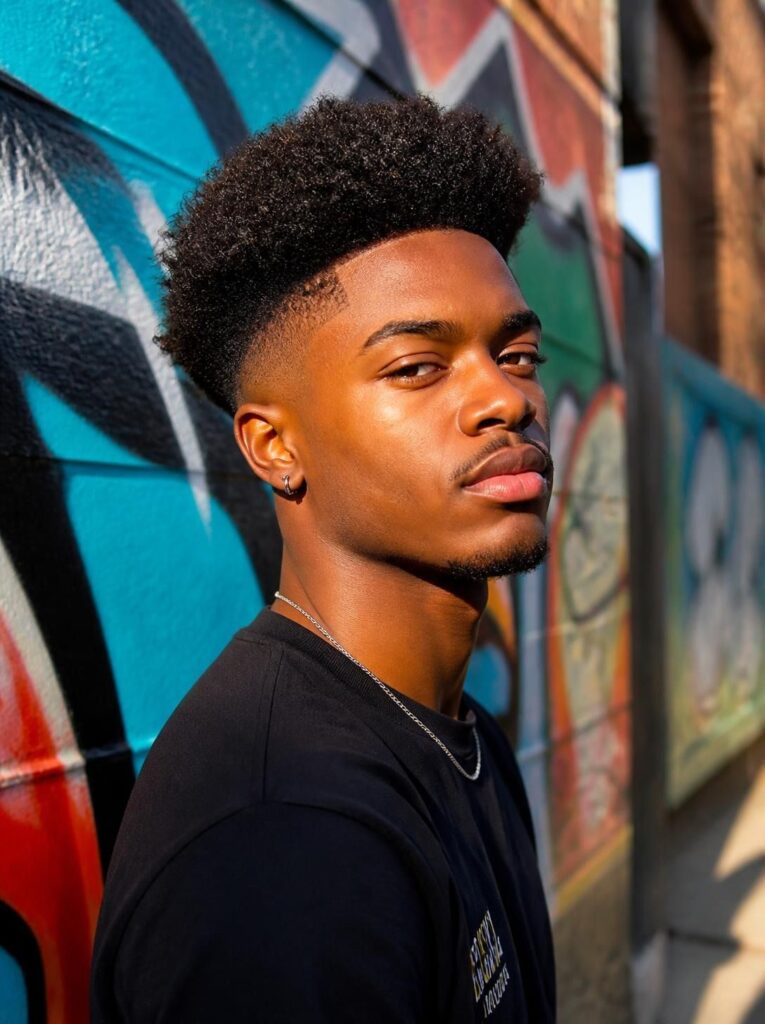
This is the cleanest starting point.
You get an evenly rounded Afro on top and a high taper on the sides.
Ask your barber to keep the perimeter even all the way around.
It’s a great first choice if you’re new to the cut.
2. Short or mini Afro high taper

Here the top sits around 1 to 3 inches, often called a teeny weeny Afro.
The taper keeps the sides tight, so the shape looks crisp.
It’s low effort and works well on dense coils.
A quick shape up keeps it looking fresh.
3. Defined-coil high taper Afro
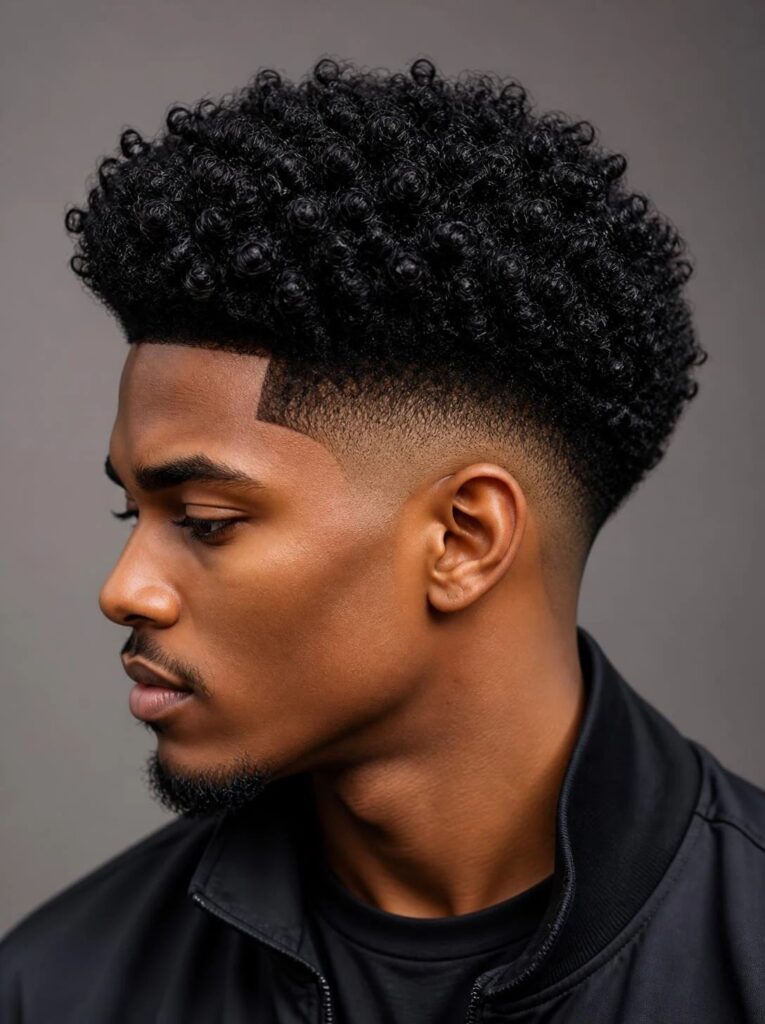
This style shows off your natural curl pattern.
A light curl cream helps the coils clump and stay soft.
The tight sides make the defined top stand out even more.
It works best on freshly washed hair.
4. Sponge-twist high taper Afro
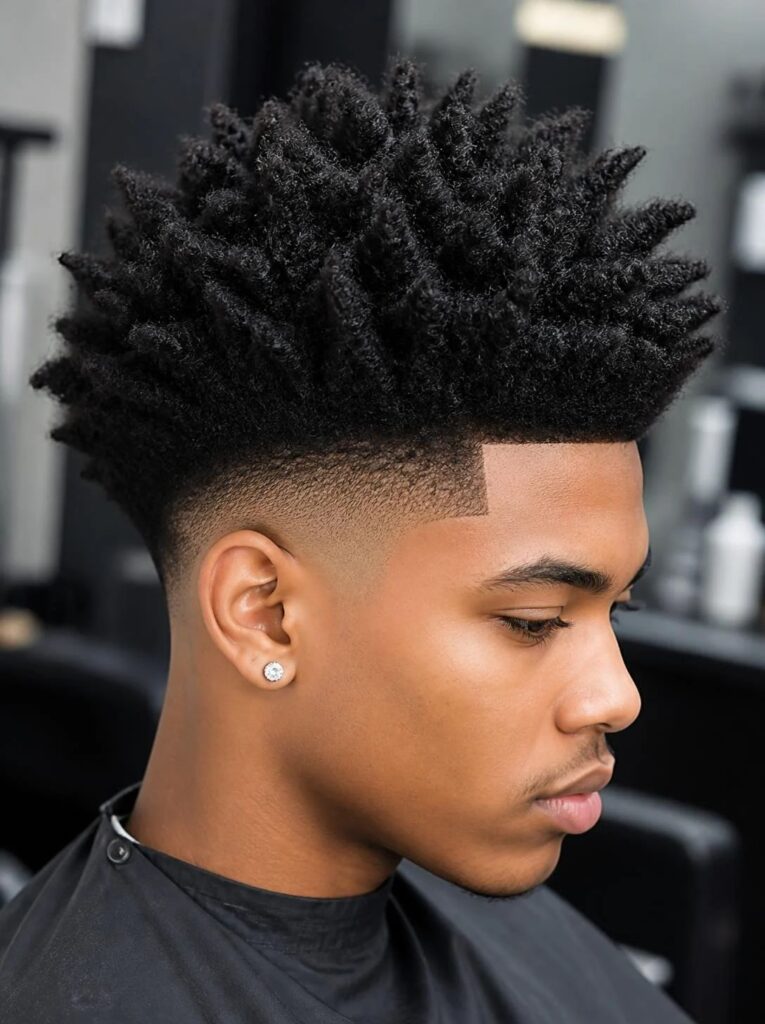
A curl sponge turns the top into small, twisted coils.
You’ll want about 3 to 4 inches of hair for it to work.
The high taper keeps the sides neat, so the twists become the focus.
Ask your barber to do the taper first and then twist the top.
5. Blowout or high-volume high taper Afro
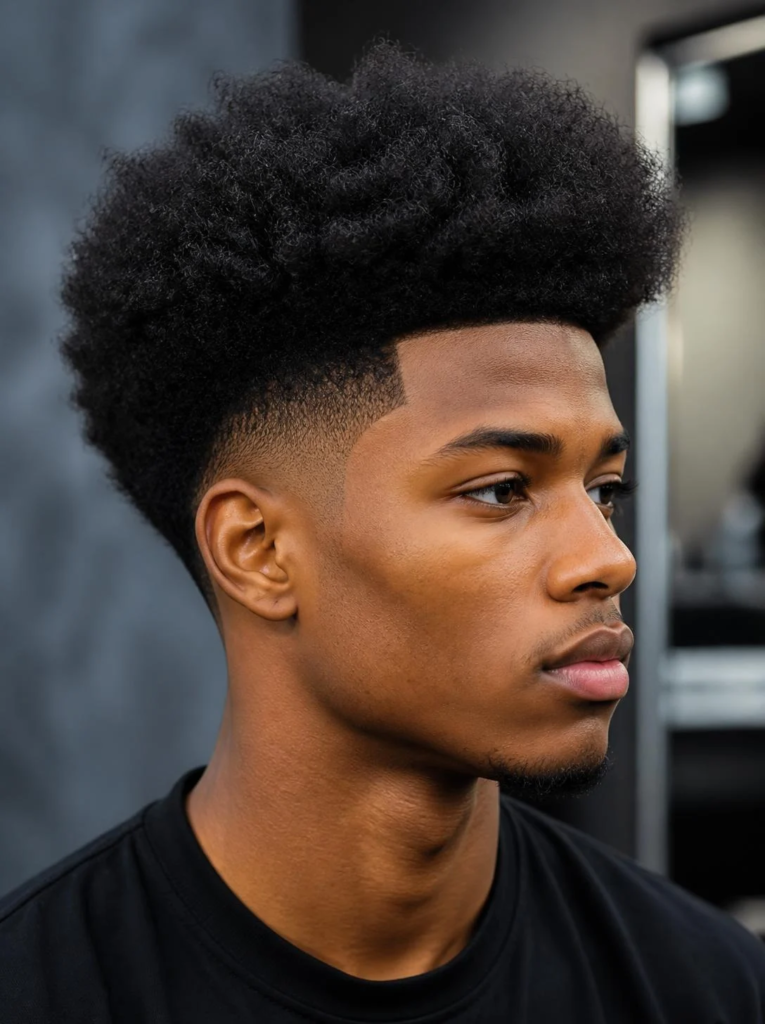
This one is all about height and fullness.
A blow dryer or wide tooth pick stretches the hair for a bigger shape.
Use a heat protectant if you blow dry.
The taper balances the volume and keeps the look from feeling heavy.
6. High taper Afro with a sharp line-up
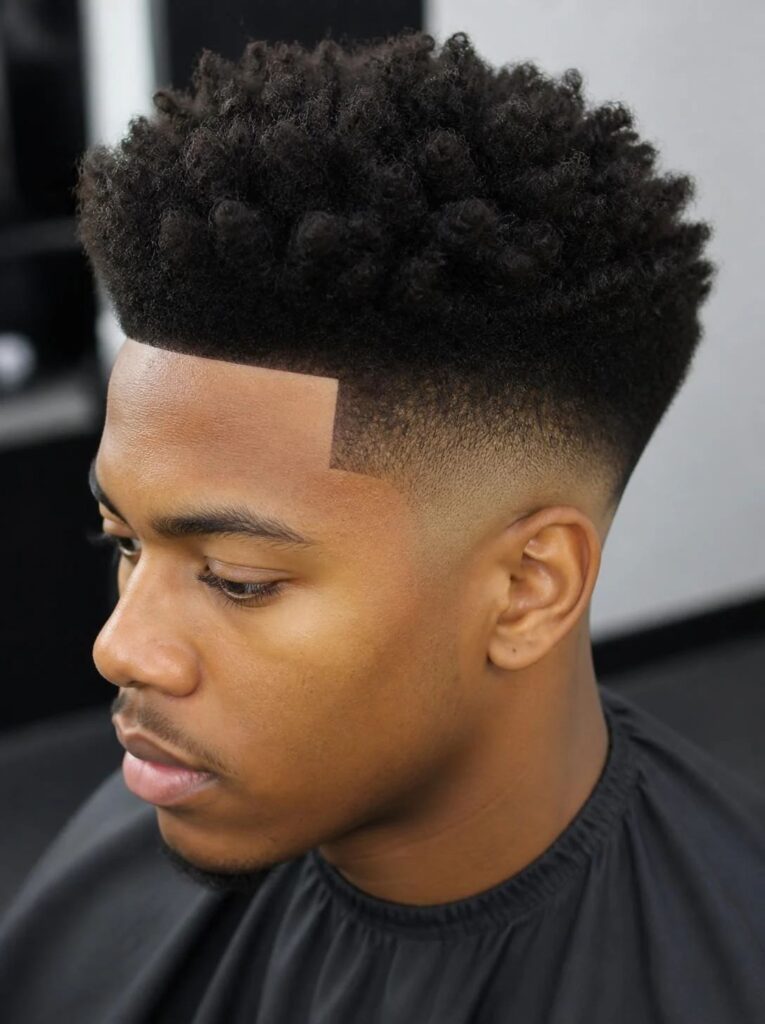
A line up frames your hairline and edges with clean, straight lines.
It makes the whole cut look more polished.
Ask for a natural hairline, not one pushed too low or too far back.
Edges stay crisp for about a week or two.
7. High taper Afro with a beard fade
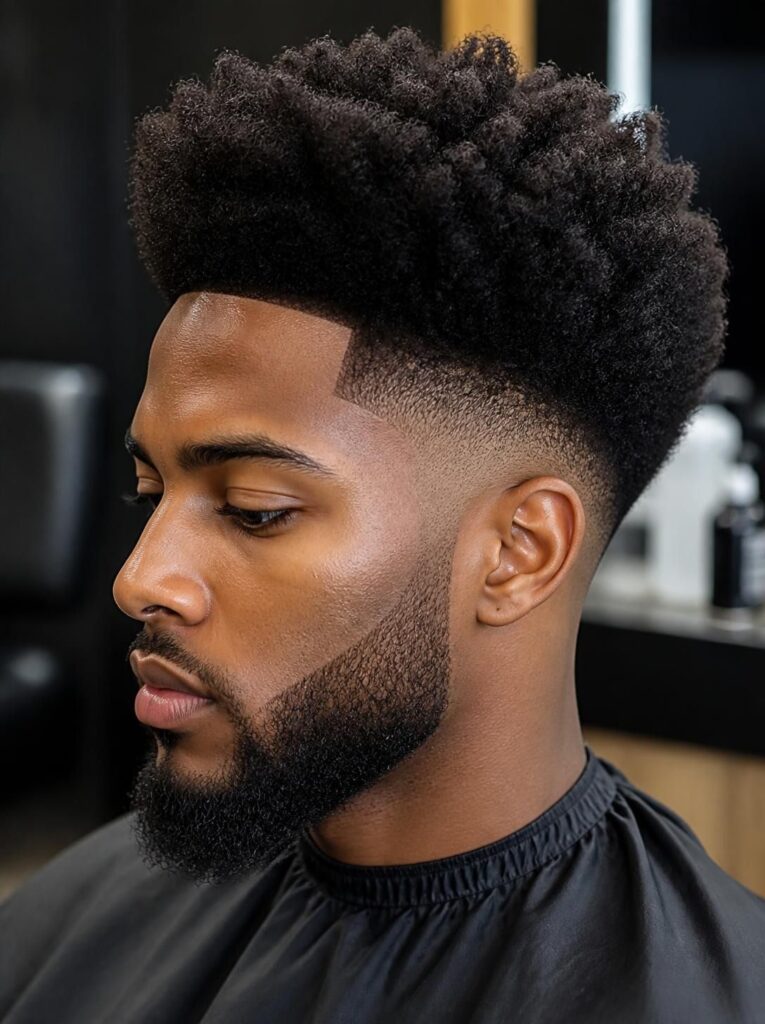
Here the sideburns blend into your beard for one smooth flow.
It keeps your face looking clean from top to chin.
Ask your barber to match the taper height to the beard.
If your beard is full, the blend is easy to fine tune.
8. High taper Afro with a skin finish
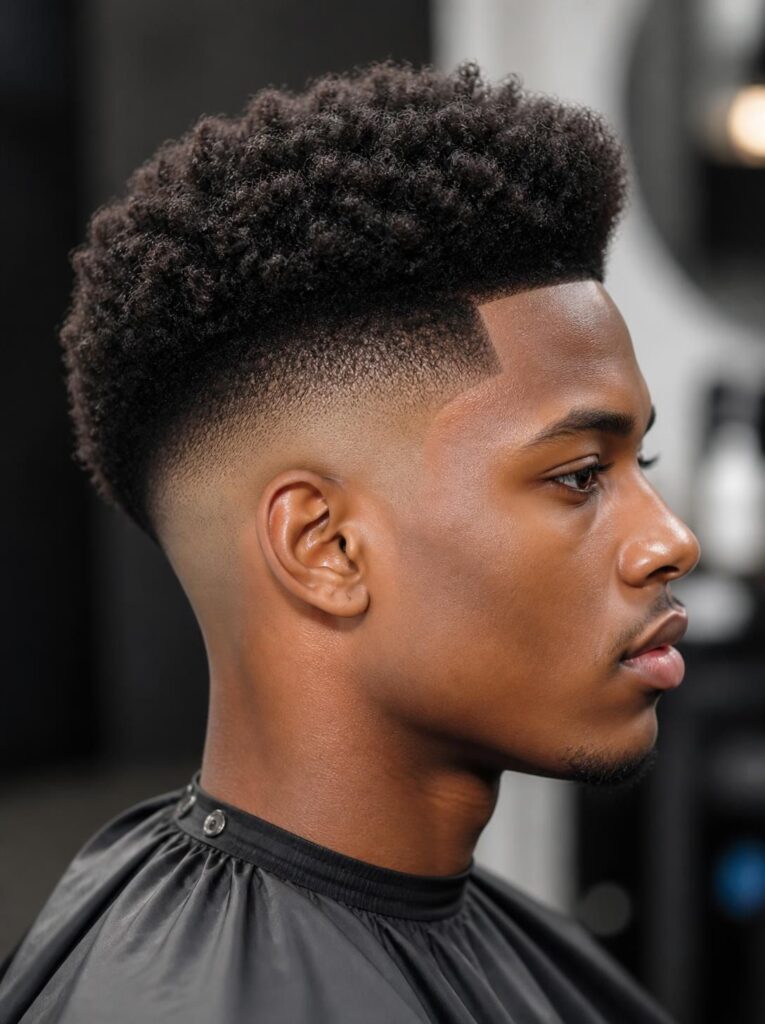
The bottom of the taper goes down close to the skin.
It’s the boldest version, with the sharpest contrast.
A skin finish grows back fast and can irritate sensitive skin.
Read the risks section below before you choose it.
How to ask your barber for a high taper fade Afro
A clear script saves you from a bad cut.
Barbers work faster and better when they know exactly what you want.
Here’s a simple script you can use:
“I’d like a high taper fade Afro. Start the taper at the temple, keep the sideburns and neckline clean, and leave about 3 inches on top. Keep the shape round and the perimeter even. No skin on the sides, just a gradual blend.”
Barber consultation checklist
Go through these points before the clippers come out:
- Taper height: at or just above the temple.
- Bottom length: a guard number, skin, or short with some length left.
- Top length: show it with your fingers in inches, and mention shrinkage.
- Hairline: natural or a sharp line up.
- Neckline: rounded, squared, or tapered.
- Beard: blend it in or keep it separate.
- Return time: ask how often you should come back.
It also helps to ask if your barber works on Afro texture every day.
Experience with coily hair makes a big difference in the blend.
Reference photo checklist
Photos remove guesswork.
Use these tips to pick the right ones:
- Choose hair with a similar texture to yours.
- Bring a front, side, and back view if you can.
- Pick photos with a similar length on top.
- Point out what you like, such as the taper height or the top shape.
- Skip heavily filtered or edited photos.
How to maintain a high taper fade Afro
A good cut only looks good if you care for it.
The routine is simple and doesn’t take long.
Daily styling routine
Pick out the top gently with a wide tooth comb or Afro pick.
Mist it lightly with water or a leave in conditioner first.
Shape the Afro with your hands and fix any uneven spots.
Brush the tapered sides with a soft brush to keep them tidy.
Sleep on a satin pillowcase or wear a satin bonnet or durag to protect the shape.
Washing, conditioning, and moisture
Wash every 1 to 2 weeks with a sulfate free shampoo.
Washing too often can dry out coily hair.
Follow with a conditioner and a water based leave in.
Seal in moisture with a light oil or butter.
Don’t forget the tapered sides, since your scalp needs moisture too.
When to book a touch-up
Hair grows about half an inch a month.
A high contrast cut softens quickly as it grows.
Book a touch up every 2 to 3 weeks for the sharpest look.
If you don’t mind a softer blend, 3 to 4 weeks is fine.
A line up can be refreshed in between.
Common mistakes and risks
Most problems come from poor communication or too much closeness.
Here’s what to watch for.
Cut and consultation mistakes
- Mixing up “high taper” and “high fade” and getting a cut that’s too short.
- Skipping reference photos.
- Forgetting about shrinkage and asking for a top that’s too short.
- Letting the taper go too high on a thin crown.
- Asking for a hairline that’s pushed back too far.
- Waiting too long between touch ups.
Scalp irritation and when to avoid a very close finish
Very close cuts can cause razor bumps and ingrown hairs, especially on curly hair.
This is more common if you shave with a razor.
Skip the skin finish if you get bumps easily or have active eczema, dermatitis, or folliculitis.
Choose a taper with some length left at the bottom instead.
Make sure your barber uses clean tools.
If irritation lasts more than a few days, see a doctor or dermatologist.
Alternatives if a high taper feels too aggressive
Not everyone wants that much contrast.
These options give you a softer take on the same idea.
- Low taper fade Afro: starts just above the ears for a subtle finish.
- Mid taper fade Afro: a balanced middle ground.
- Temple taper: focuses the blend around the temple and sideburns.
- Scissor cut perimeter: keeps the edges soft and natural.
- Brush cut or short Afro: a clean, low effort look with no strong contrast.
If you’re unsure, start with a mid taper.
You can always go higher at your next visit.
High taper fade Afro FAQs
What is a high taper fade Afro?
It’s a full Afro on top with a taper that starts high at the temple and shortens toward the sideburns and nape.
Is a high taper fade Afro the same as a high fade Afro?
No. A taper leaves some length at the edges, while a high fade usually goes shorter, often to the skin.
How long should my hair be on top?
Aim for about 2 inches or more. Longer hair gives you more room to shape the Afro.
How often should I get a touch up?
Every 2 to 3 weeks keeps the contrast sharp. Every 3 to 4 weeks works if you like a softer blend.
Does a high taper fade Afro work on 4C hair?
Yes. Dense 4C hair holds shape well and shows the contrast clearly.
Is a high taper fade Afro good for a receding hairline?
It can work, but keep the hairline natural. Ask your barber to avoid pushing it back.
Can I get a high taper fade Afro with twists?
Yes. Sponge twists or defined coils look great on top of a high taper.
Final thoughts
A high taper fade Afro gives you volume on top and a clean, sharp finish on the sides.
It works best when you know the taper height, the top length, and the finish you want.
Bring photos, use the script, and book regular touch ups.
Take care of your scalp, and skip the skin finish if your skin gets irritated easily.
Want more taper fade guides?
Now that you know how the high taper works, explore the other heights too.
Our low taper fade and mid taper fade guides show how each one looks and who it suits.
You can also read up on burst fades and brush cuts.
They’re good options if you want a different kind of contrast.
Plan this cut with our free tools
Take the guesswork out of your next visit.
Use our free tools to plan your taper height, top length, and touch up dates before you book.
Save your barber script and reference photos in one place.
That way you walk in ready and walk out happy.
Meta description (118 characters):
High taper fade Afro guide with 8 styles, a barber script, upkeep tips, and mistakes to avoid. Get a clean, sharp cut.
Research notes
- The top results are mostly photo galleries with 27 to 37 style lists and thin explanations.
- Several pages blur “high taper” and “high fade”, and some place the fade at the crown while others place it at the temple. Your article fixes this with a clear comparison and table.
- Most pages lack a barber script, a hair texture and density guide, shrinkage advice, touch up timing, and razor bump warnings. Your outline covers all of these.
- LSI and entity terms used naturally: taper, fade, temple, sideburns, nape, neckline, line up, shape up, skin fade, blowout, sponge twist, 4A, 4B, 4C, coily hair, shrinkage, Afro pick, razor bumps, satin, leave in conditioner.
- The main keyword appears about 13 times in roughly 2,100 words, which is inside your 0.5 to 1% range.

Cameron Wells is a fashion writer and style enthusiast covering fashion shows, emerging trends, designer collections, and modern style. With a strong interest in the fashion industry, Cameron creates clear, practical, and engaging content that helps readers understand seasonal trends, runway highlights, and evolving fashion movements with confidence.