


A mid taper fade for Asian hair keeps the sides neat and the top full.
It starts around the temple and blends down to the neckline.
That makes it clean for work and easy to style on a busy morning.
Many Asian men have straight, dense hair that grows outward from the scalp.
That’s why the sides can puff up fast and the shape falls apart.
A good mid taper fixes that without going all the way to a skin fade.
This guide covers what the cut is, who it suits, and 10 styles to try.
You’ll also get a simple script for your barber and a clear upkeep plan.
What a Mid Taper Fade for Asian Hair Is
A mid taper fade shortens the sides and back in smooth steps.
The hair goes from very short at the neckline to longer as it moves up.
Unlike a skin fade, it usually leaves a little length at the bottom.
On dense hair, the blend does extra work.
It removes bulk from the sides so the top can sit on a clean base.
The result looks sharp but still soft.
Where a Mid Taper Sits
The taper starts at about temple height.
That’s roughly halfway up the side of the head.
It sits between a low taper near the ears and a high taper well above the temples.
Barbers also shorten the sideburns and neckline first, then blend upward.
Guard numbers change from barber to barber.
A common range runs from a #1 at the bottom to a #3 or #4 near the top of the taper.
Is “Asian Hair” a Hair Type?
Not really.
Asia is huge, and hair varies a lot from person to person.
Some men have thick straight hair, while others have fine, wavy, or curly hair.
Still, many East Asian men share a few traits.
The hair is often straight and the strands can be thick.
Treat that as a rough guide, then judge your own hair before you book.
Who a Mid Taper Fade Suits Best
This cut suits men who want something tidy with real length on top.
It works for school, the office, and creative jobs.
You need at least two inches on top if you want to style it.
It’s also a safe middle option.
It’s bolder than a low taper but softer than a high fade.
If you’re unsure, it’s a good first taper.
Hair Texture, Density, and Growth Direction
Your hair type changes how the cut should be done.
Use this as a quick check:
- Thick, straight hair: Ask for a gradual blend so the sides don’t flare out. Thin the top a little so it doesn’t sit like a helmet.
- Fine, straight hair: Keep the top a bit longer for weight and use texture products for lift.
- Wavy or curly hair: Leave more length on top so the waves can settle. A clean taper makes natural movement look planned.
- Strong growth direction: Hair that grows straight out at the sides needs more frequent touch ups.
Face Shape, Head Shape, Hairline, and Cowlicks
Small details matter as much as the fade.
A barber should look at these before picking a style:
- Round face: Add height on top and keep the sides tight to look longer.
- Square face: A softer top, like a fringe or crop, balances a strong jaw.
- Long face: Skip too much height. A fringe or side part works better.
- Flat back of the head: Leave a little more length at the back so the shape looks fuller.
- Cowlicks and a low hairline: Ask your barber to cut with the growth, not against it. Keep the top longer to hide the swirl.
10 Mid Taper Fade Styles for Asian Hair
These styles work across most hair types.
Pick based on your top length and how much time you want to spend each morning.
1. Classic Mid Taper with a Textured Top

This is the easy one.
The top is cut a little uneven so it looks natural, not stiff.
A pinch of matte clay is all it needs.
2. Mid Taper with a Textured Fringe

The front falls forward just above the brows.
It softens the forehead and suits round or square faces.
It’s popular for a younger, relaxed look.
3. Mid Taper with a Textured Crop
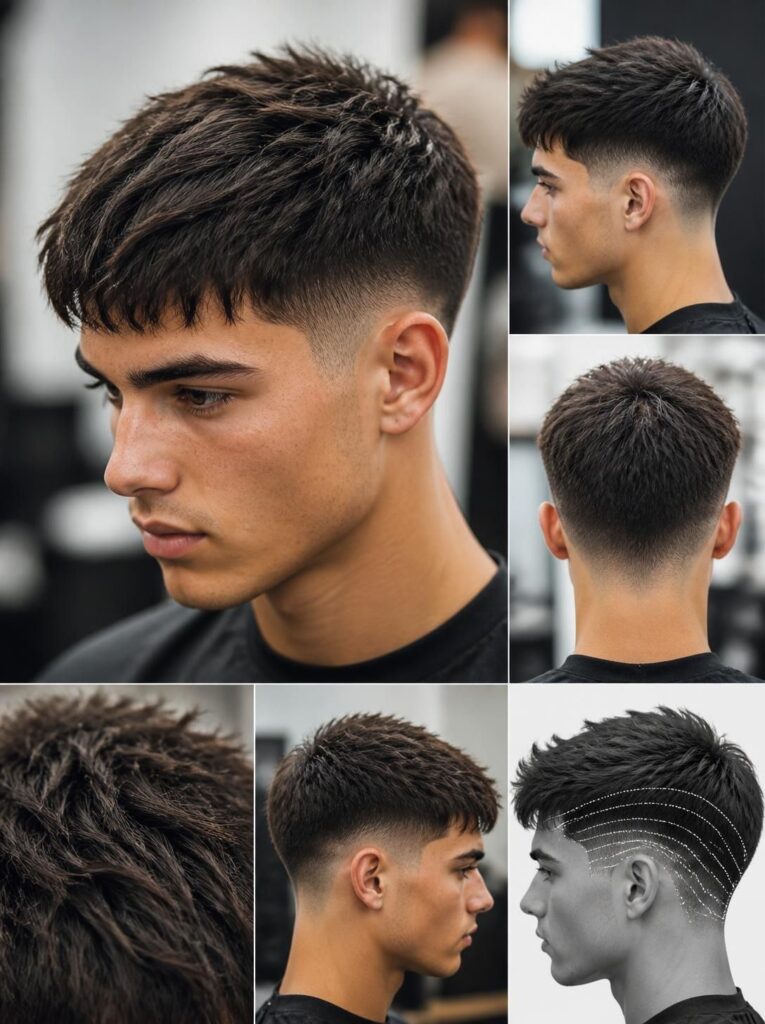
The top is short, choppy, and pushed forward.
It’s low effort and great for thick hair.
Use a light paste to define the ends.
4. Middle Part or Curtains with a Mid Taper

The hair splits in the center and falls to each side.
You need about three to four inches on top.
The tapered sides keep the curtains from looking messy.
5. Two-block with a Mid Taper
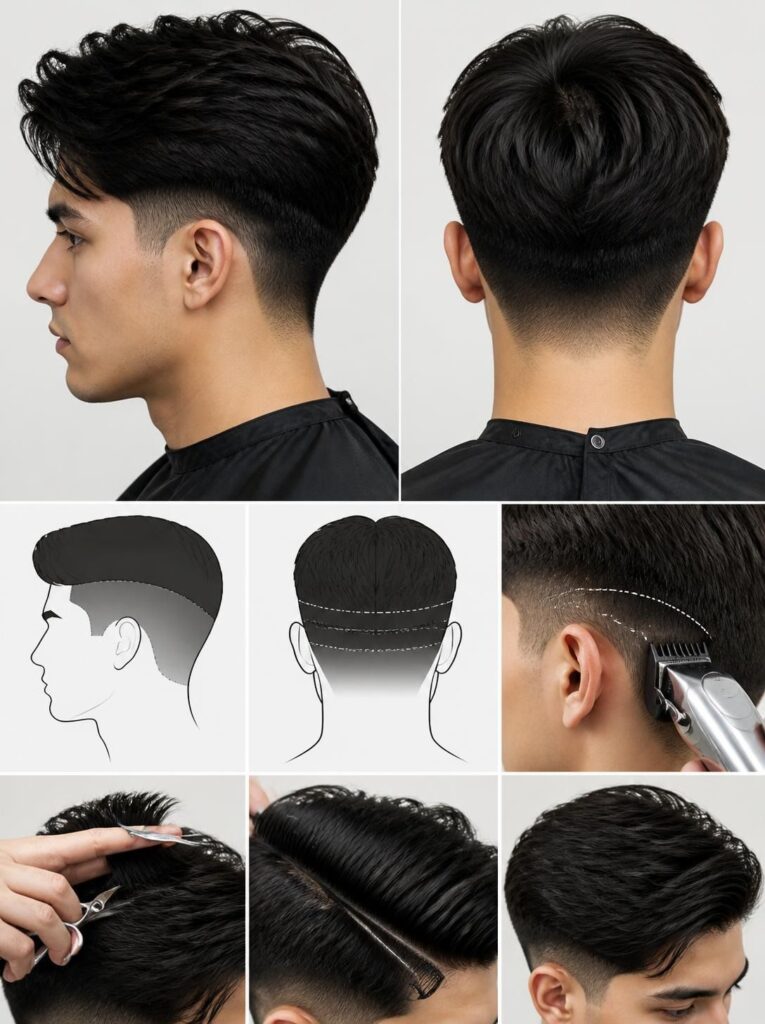
The sides and back are short, while the top stays longer and separate.
This cut is common in Korean style barbering.
The mid taper makes the line between the two sections look smoother.
6. Fluffy Layered Top with a Mid Taper

Layers add air and movement.
Blow dry the top upward and use a light powder or sea salt spray.
It looks soft but still keeps clean sides.
7. Mid Taper with a Down Perm
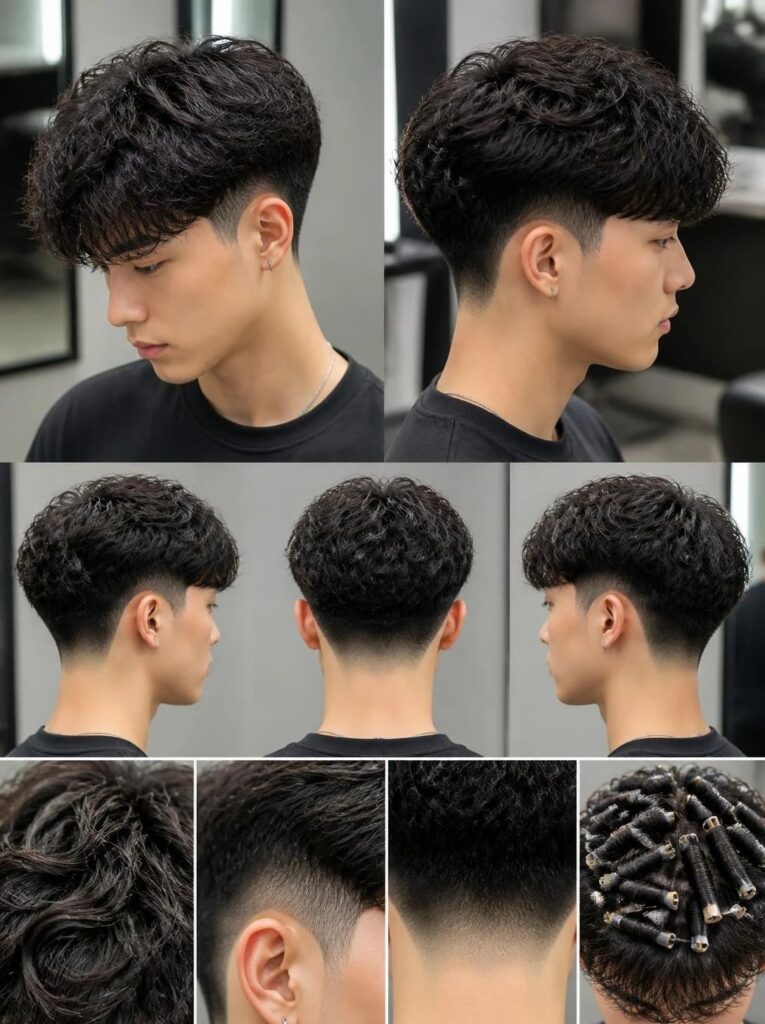
A down perm relaxes the hair and makes it lie flat in a controlled way.
It helps straight hair that sticks out at the sides or crown.
Ask a stylist who does perms often, since results depend on skill.
8. Wavy or Permed Top with a Mid Taper

A soft wave perm adds body to straight hair.
The tapered sides keep the volume from looking wide.
It’s a good pick if your hair falls flat by lunch.
9. Blowout or Quiff with a Mid Taper

Dry the front up and back with a brush and a bit of heat.
Finish with a flexible hold spray.
It adds height and works well on longer faces if kept modest.
10. Slick Back or Side Part with a Mid Taper
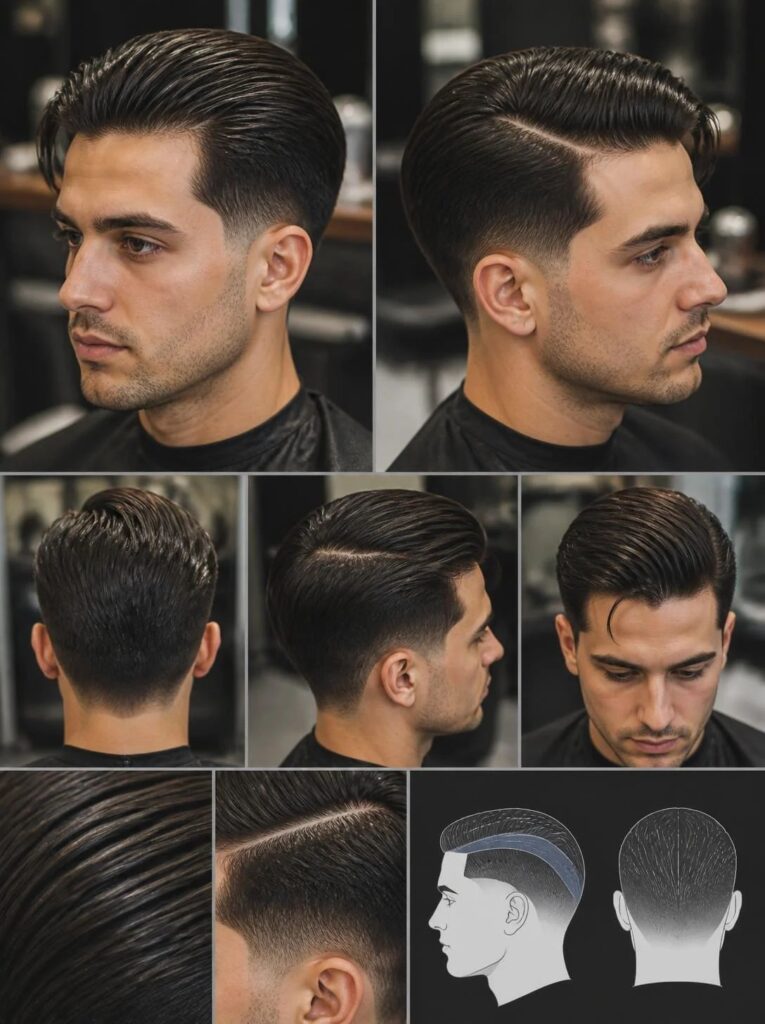
This is the clean, formal option.
Use a water based pomade for shine or a cream for a matte finish.
It needs at least three inches on top to stay in place.
Mid Taper Fade vs Low Taper, Mid Fade, Two-block, and Undercut
These names get mixed up a lot.
This table shows the main differences:
| Cut | Where it starts | Contrast | Upkeep |
| Mid taper | Around the temple | Medium | Every 2 to 3 weeks |
| Low taper | Near the ears and neckline | Soft | Every 3 to 4 weeks |
| Mid fade | Mid head, down to skin | High | Every 2 weeks |
| Two block | Sides and back cut short, top separate | High | Every 3 to 4 weeks |
| Undercut | Sides cut short with no blend | Very high | Every 3 to 4 weeks |
A taper keeps some length at the bottom.
A fade usually goes down to the skin.
That’s the main difference between a mid taper and a mid fade.
Which Alternative Should You Choose?
Use these quick rules:
- Pick a low taper if you want the most subtle, office safe look.
- Pick a mid fade if you want a sharper, bolder edge.
- Pick a two block if you want a clear contrast and a fuller top.
- Pick an undercut if you want a hard line and don’t mind the grow out.
- Stay with a mid taper if you want a balance of both.
How to Ask a Barber for a Mid Taper Fade
Most bad haircuts come from unclear instructions.
A short, clear script solves that.
Say less, but say the right things.
What to Tell the Barber, in Five Steps
- Say “mid taper fade” and show where it should start, about the temple.
- Tell them how short the neckline should be, such as a #1 or a #2.
- Say how much length you want on top, in inches or fingers.
- Mention your hair type, like thick, fine, wavy, or straight.
- Tell them how you style it, such as with a fringe, a part, or pushed back.
Also mention cowlicks and any thin spots.
A good barber will adjust the cut around them.
What Should Your Reference Photo Show?
A photo saves time.
Pick one that matches your hair, not just the style.
- The front, side, and back of the head
- Hair of a similar thickness and texture
- The same top length you want
- Good light so the taper line is visible
How to Style and Maintain a Mid Taper Fade
A good cut is only half the job.
The other half is what you do at home.
The routine is simple and short.
Daily Styling by Finish
Start with towel dried hair.
Use a small amount of product and add more if needed.
- Matte finish: Use clay or paste. Rub it in your palms, then work it through from the back to the front.
- Natural finish: Use a light cream or sea salt spray. It keeps hair soft and flexible.
- Shiny finish: Use a water based pomade. Comb it through for a clean, neat look.
- Volume: Blow dry the roots upward, then set with a light spray.
Heavy waxes can weigh down straight hair.
Start small, since you can always add more.
How Often Does a Mid Taper Need a Touch Up?
Most men need a touch up every 2 to 3 weeks.
Hair that grows fast or straight out may need it sooner.
A softer taper can last four weeks if you don’t mind a looser shape.
Hair grows about half an inch a month on average.
That’s enough for the taper line to look blurry after a few weeks.
Book your next visit before you leave the chair.
Heat, Close Shaving, and Scalp Irritation
Blow drying every day can dry out your hair and scalp.
Use a medium heat setting and keep the dryer moving.
A heat protectant spray is a good idea.
Close shaving at the neckline can cause razor bumps.
Ask your barber to use a trimmer instead of a razor if your skin is sensitive.
Wash your hair regularly and rinse out product so it doesn’t clog your scalp.
If you get redness, itching, or flaking that doesn’t go away, see a dermatologist.
That’s better than guessing with products.
FAQs About Mid Taper Fade for Asian Hair
Is a mid taper fade good for Asian hair?
Yes, it works well for most types, especially thick and straight hair.
It controls bulk on the sides and keeps the top easy to style.
What is the difference between a mid taper and a mid fade?
A mid taper keeps some length at the bottom.
A mid fade usually goes down to the skin and looks sharper.
How long should my hair be for a mid taper fade?
Keep at least two inches on top for most styles.
Aim for three to four inches for curtains, a slick back, or a side part.
Does a mid taper work with thin or fine Asian hair?
Yes, but keep the top a little longer and avoid heavy products.
A soft taper makes fine hair look fuller.
How often should I get a mid taper fade touched up?
Plan on every 2 to 3 weeks for a clean line.
You can stretch it to four weeks for a softer look.
What should I say to my barber for a mid taper fade?
Say “mid taper fade, starting at the temple,” then give the neckline length and top length.
Bring a photo of the same hair type.
Conclusion
A mid taper fade for Asian hair is a smart, flexible cut.
It keeps the sides tidy, gives the top room to move, and works with many hair types.
The right style depends on your texture, density, and face shape.
Pick one of the 10 styles, bring a clear photo, and use the five step script.
Then keep up with touch ups every few weeks.
That’s all it takes to keep the cut looking sharp.

Cameron Wells is a fashion writer and style enthusiast covering fashion shows, emerging trends, designer collections, and modern style. With a strong interest in the fashion industry, Cameron creates clear, practical, and engaging content that helps readers understand seasonal trends, runway highlights, and evolving fashion movements with confidence.