

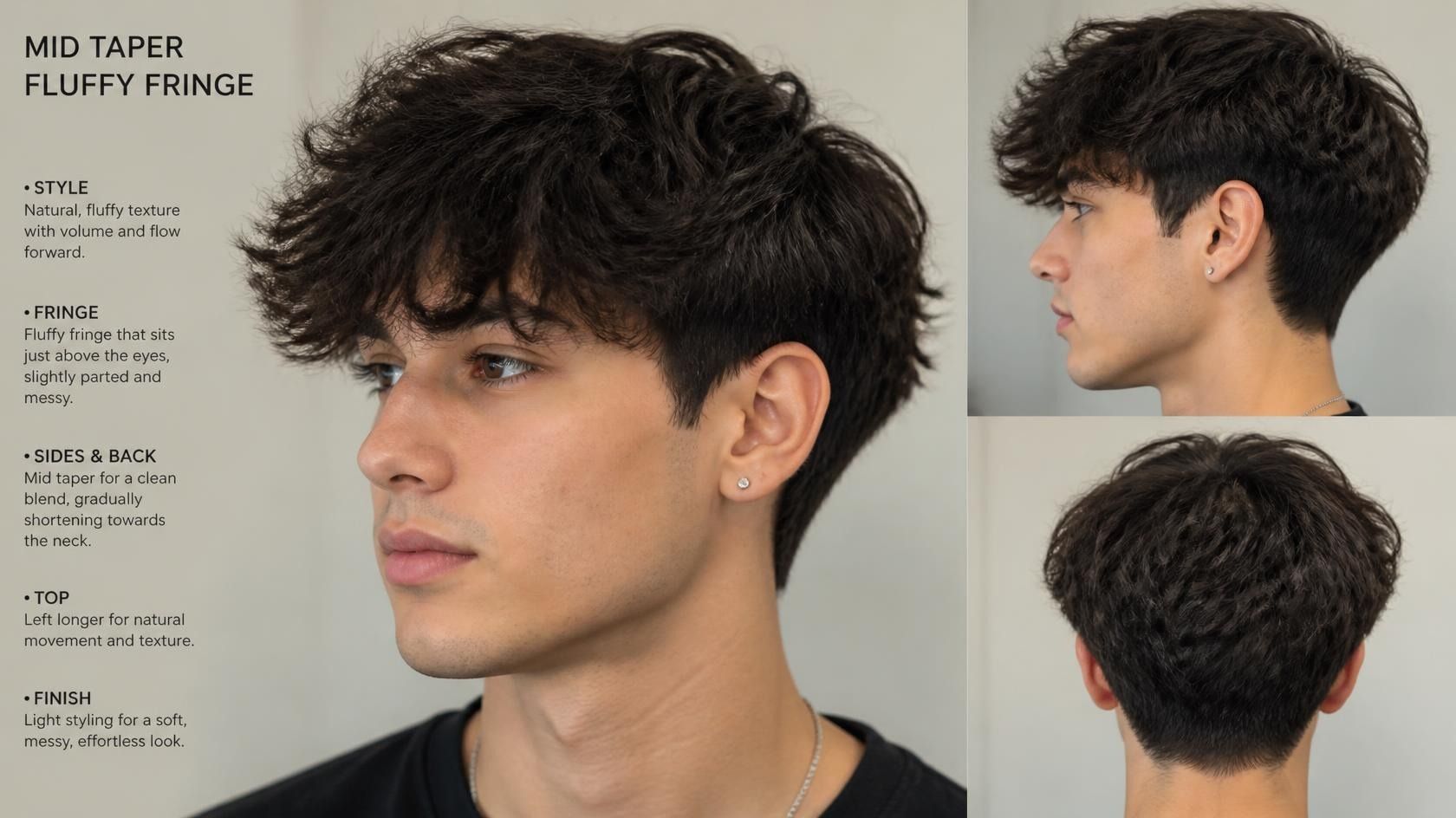
Meta description: Mid taper fade fluffy hair explained: styles, barber script, 5 step styling routine, upkeep tips, and mistakes to avoid.
Mid taper fade fluffy hair is a cut with neat, short sides and a soft, lifted top.
It looks sharp without feeling stiff.
Most guides show photos but skip the details that matter.
They don’t tell you how much length you need, how to talk to your barber, or why the style goes flat by day three.
This guide covers all of it in plain words.
You’ll learn what the cut is, who it suits, how to style it, and how to keep the volume.
What is a mid taper fade with fluffy hair?
A mid taper fade with fluffy hair is a haircut with short, blended sides and a longer, airy top.
The sides shorten gradually, and the top stays textured and full.
It’s popular because it works for work, school, and weekends.
It also grows out gracefully, which helps if you can’t visit the barber every two weeks.
What does “mid taper fade” mean at the barbershop?
“Mid” tells the barber where the shortening starts.
It begins around the temple and ear level, about halfway up the sides of your head.
“Taper” means the hair gets shorter in a smooth gradient.
“Fade” means the bottom can go very short, sometimes down to skin, if you ask for it.
So a mid taper fade blends both ideas.
Your barber keeps some length near the sideburns and neckline, then fades up into the longer top.
What makes the top look “fluffy”?
Fluffy hair has lift at the roots and softness at the ends.
It doesn’t look slicked down or pressed flat.
Three things create that look:
- Enough length, usually about 3 to 4 inches on top
- Texturizing, which removes weight so strands can move
- Styling with a blow dry and a light, matte product
Is this haircut right for your hair?
For most hair types, yes.
The cut adapts to your texture, so the real question is how much work you want to put in.
Your barber can adjust the top length and the amount of thinning.
That’s why it helps to know your hair type before you sit down.
Which hair textures and densities work best?
Here’s how it plays out on different hair:
- Straight and thick: Works very well. Texturizing keeps it from looking like a helmet.
- Straight and fine: Works with some help. Keep the top a bit longer and use a volumizing product.
- Wavy: Often the easiest. Waves create natural fluff with little effort.
- Curly: Looks great. Leave more length so curls can spring up and show shape.
- Coily: Works well with a soft shaped top and a clean mid taper around it.
Density matters too.
Thin or low density hair looks fuller when you keep more length on top and avoid heavy thinning.
How much top length and fringe do you need?
Aim for about 3 to 4 inches on top for a clear fluffy look.
Shorter than 2 inches tends to look like a standard crop.
The fringe should reach near your brow when pulled forward.
That gives you enough hair to push up, sweep across, or let fall softly.
A quick test helps you decide:
- Dry your hair fully.
- Pull the front section forward.
- Check if it reaches your eyebrows.
If it does, you have enough to work with.
If not, grow it for a few more weeks before getting the cut.
Mid taper vs low taper vs mid fade: which is better for fluffy hair?
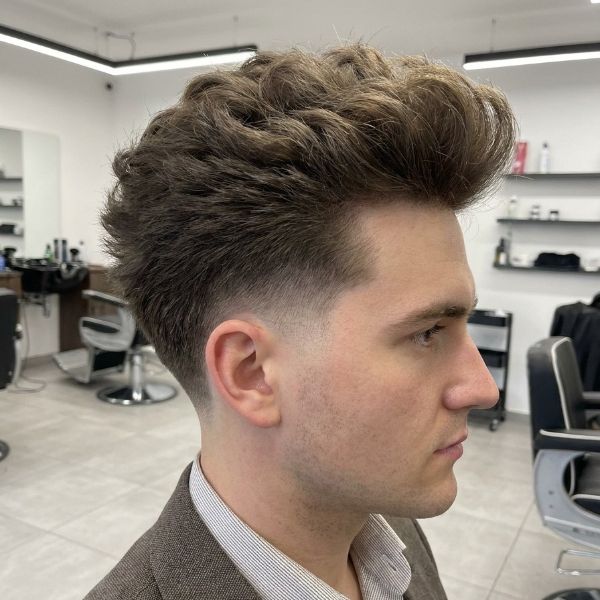
These three cuts look similar in photos, but they behave differently.
The right pick depends on how much contrast and upkeep you want.
A mid taper is the safest all round choice for fluffy hair.
It frames the top without drawing too much attention to the sides.
Compare contrast, side weight, grow out, and styling
| Feature | Low taper | Mid taper | Mid fade |
| Contrast | Soft and subtle | Balanced | Strong and bold |
| Side weight | Most hair left on sides | Medium | Least hair on sides |
| Grow out | Easiest, stays neat longest | Good | Needs more frequent visits |
| Styling | Natural, relaxed look | Easy to style many ways | Sharper, more dramatic look |
| Best for | Subtle, low upkeep fluff | Most people, most textures | Clean cut, high contrast fluff |
A low taper keeps more weight on the sides, so the top looks less tall.
A mid fade cuts the sides closer, so the fluffy top stands out more.
Choose the mid taper if you want balance.
Choose the mid fade if you like a bold contrast and don’t mind frequent trims.
Which mid taper fade fluffy hair variation should you choose?
You can keep the same mid taper and change the top.
Each version suits a different mood and hair type.
Pick the one that matches your texture and daily routine.
You’ll get better results when the style works with your hair, not against it.
Fluffy fringe

This is the classic version.
The front falls forward in a soft, airy fringe, and the sides stay tidy.
It works best on straight to wavy hair.
Use a sea salt spray and a light powder to keep it feeling soft, not stiff.
Blowout taper

The blowout taper lifts the hair up and back for height.
You use a blow dryer to build volume at the roots.
It suits medium to thick hair.
It takes about five minutes to style once you know the technique.
Wavy, curly, or coily top
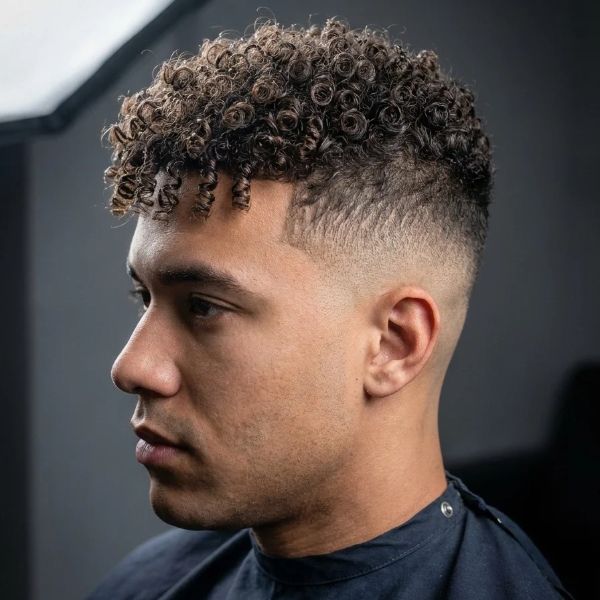
This version lets your natural texture lead.
The barber shapes the top so curls or waves sit evenly instead of forming bulky sections.
Leave extra length so curls can bounce.
A defined shape plus a clean mid taper makes the curls look intentional.
Messy textured top

This one looks relaxed and a little undone.
The barber cuts choppy layers so the top moves in different directions.
It works well on thick hair, since it removes bulk.
Use a matte clay or paste and scrunch it with your fingers.
What should you ask your barber for?
A clear request saves you from a surprise.
Words like “fluffy” and “mid” mean different things to different barbers.
Describe the sides, the top, and the finish.
That covers everything your barber needs to know.
Use a four part barber script
Say these four things in order:
- Where the taper starts: “I’d like a mid taper fade.”
- How short at the bottom: “Take it down to a number 1 at the nape and sideburns” or “Take it to skin.”
- Top length and fringe: “Leave about 3 to 4 inches on top, and keep the fringe long enough to reach my brows.”
- Finish: “Please texturize the top so it looks fluffy, and keep the neckline natural.”
Here’s the script in one go:
“Mid taper fade, number 1 at the bottom, 3 to 4 inches on top, soft texturized fringe, natural neckline.”
Add a line up only if you want a crisp edge.
For a softer look, skip it.
Bring the right reference photos
Photos help, but only if they match your hair.
Pick pictures with similar texture, density, and hairline.
Bring two or three images, and point out what you like in each.
For example, say “I like this fringe” or “I like how short the sides are.”
A photo from the back and the side is also useful.
It shows how the taper blends around your ears and neck.
How do you style a fluffy mid taper fade at home?

Good styling takes about five to ten minutes.
Most of the work happens while your hair is damp.
The goal is lift at the roots and softness at the ends.
Heavy product kills that, so use less than you think you need.
Follow a five step styling routine
- Wash and towel dry. Pat your hair until it’s damp, not dripping.
- Add a prep product. Spray sea salt spray or a light volumizing mist from roots to ends.
- Blow dry for lift. Use medium heat and a vent brush or your fingers. Dry the roots upward and forward.
- Apply styling product. Rub a small amount between your palms, then work it through the top.
- Shape and set. Push the fringe where you want it, then finish with a light hairspray if needed.
Don’t brush the top again after it’s dry.
That’s what flattens the fluff.
Choose products by finish, texture, and hold
| Product | Finish | Texture | Hold | Best for |
| Sea salt spray | Matte | Gritty, airy | Light | Straight and wavy hair |
| Texturizing powder | Matte | Dry, lifted | Light to medium | Fine hair needing volume |
| Matte clay | Matte | Thick, workable | Medium | Thick or messy tops |
| Cream or curl cream | Natural | Soft, moisturizing | Light | Curly and coily hair |
| Light hairspray | Natural | Flexible | Medium | Setting the final shape |
Skip heavy gels and shiny pomades.
They weigh the hair down and take away the fluffy look.
How do you maintain the cut without losing volume?
The taper loses its sharpness before the top loses its shape.
That means you’ll visit the barber more for the sides than for the top.
Plan your visits around both.
A simple schedule keeps the style looking fresh.
When should you refresh the taper and reshape the top?
Refresh the taper every 3 to 4 weeks.
That keeps the sides clean and the blend smooth.
Reshape the top every 6 to 8 weeks.
This removes split ends and keeps the texture from getting heavy.
You can stretch these times if you prefer a relaxed look.
Just expect the taper to look softer as it grows out.
How can you reduce heat and styling damage?
Heat styling is the main cause of dry, frizzy fluff.
A few small habits protect your hair.
- Use a heat protectant spray before blow drying.
- Keep the dryer on medium heat, not high.
- Air dry for a few minutes first, then finish with the dryer.
- Condition after every wash, and use a deep conditioner once a week.
- Wash with shampoo only two or three times a week if your hair is dry.
Healthy hair holds volume better.
Dry, brittle strands tend to lie flat or frizz.
What mistakes make this haircut look flat or too bulky?
Most problems come from small errors.
Here are the common ones:
- Cutting the top too short. Under 2 inches, there’s no room for fluff.
- Skipping texturizing. Thick hair turns into a heavy block.
- Using too much product. Heavy gel or wax flattens the top.
- Brushing after styling. It breaks up the lift and ruins the shape.
- Choosing the wrong fade height. A very high fade on a round face can make the top look too big.
- Ignoring your cowlick. A good barber works with it, so mention it.
- Waiting too long between cuts. The taper blurs and the shape gets bulky.
Fix these, and your cut looks better with the same effort.
Tell your barber early if something feels off.
FAQs about mid taper fade fluffy hair
What is mid taper fade fluffy hair?
It’s a haircut with short, blended sides starting around mid height and a longer, textured top styled for volume.
How long should my hair be on top?
About 3 to 4 inches works best for a clear fluffy look.
Is a mid taper better than a low taper for fluffy hair?
A mid taper gives more balance and shape, while a low taper is subtler and lower upkeep.
Does a mid taper fade work on thin hair?
Yes, if you keep the top longer and skip heavy thinning.
How often should I get a mid taper fade refreshed?
Every 3 to 4 weeks for the sides, and every 6 to 8 weeks for the top.
Which product is best for fluffy hair?
Sea salt spray or texturizing powder, since they add lift with a matte finish and light hold.
Can curly or coily hair get this cut?
Yes, leave extra length on top and let your barber shape it around your curl pattern.
Should I ask for a line up?
Only if you want a sharp edge, since skipping it gives a softer, more natural look.
What to do before your appointment
A little prep helps you get the cut you want.
Run through this quick list:
- Grow your top to at least 3 inches if possible.
- Save two or three photos that match your hair type.
- Decide how short you want the bottom of the taper.
- Wash your hair the day before, so the barber sees its natural texture.
- Bring your script and say it clearly at the start.
Ask the barber to show you the back and sides with a mirror before you leave.
It’s easier to adjust the cut then than at home.
Want more taper fade guides?
If you like this cut, there’s more to explore.
Each taper height gives a different look.
Check out guides on these related styles:
- Low taper fade for a softer, subtle blend
- High taper fade for a bolder contrast
- Taper fade haircut basics and what to ask your barber
- Mid taper fade for different hair types, like Asian or curly hair
Pick the one that matches your hair and your routine.
Then bring a clear script to your next appointment.

Cameron Wells is a fashion writer and style enthusiast covering fashion shows, emerging trends, designer collections, and modern style. With a strong interest in the fashion industry, Cameron creates clear, practical, and engaging content that helps readers understand seasonal trends, runway highlights, and evolving fashion movements with confidence.