

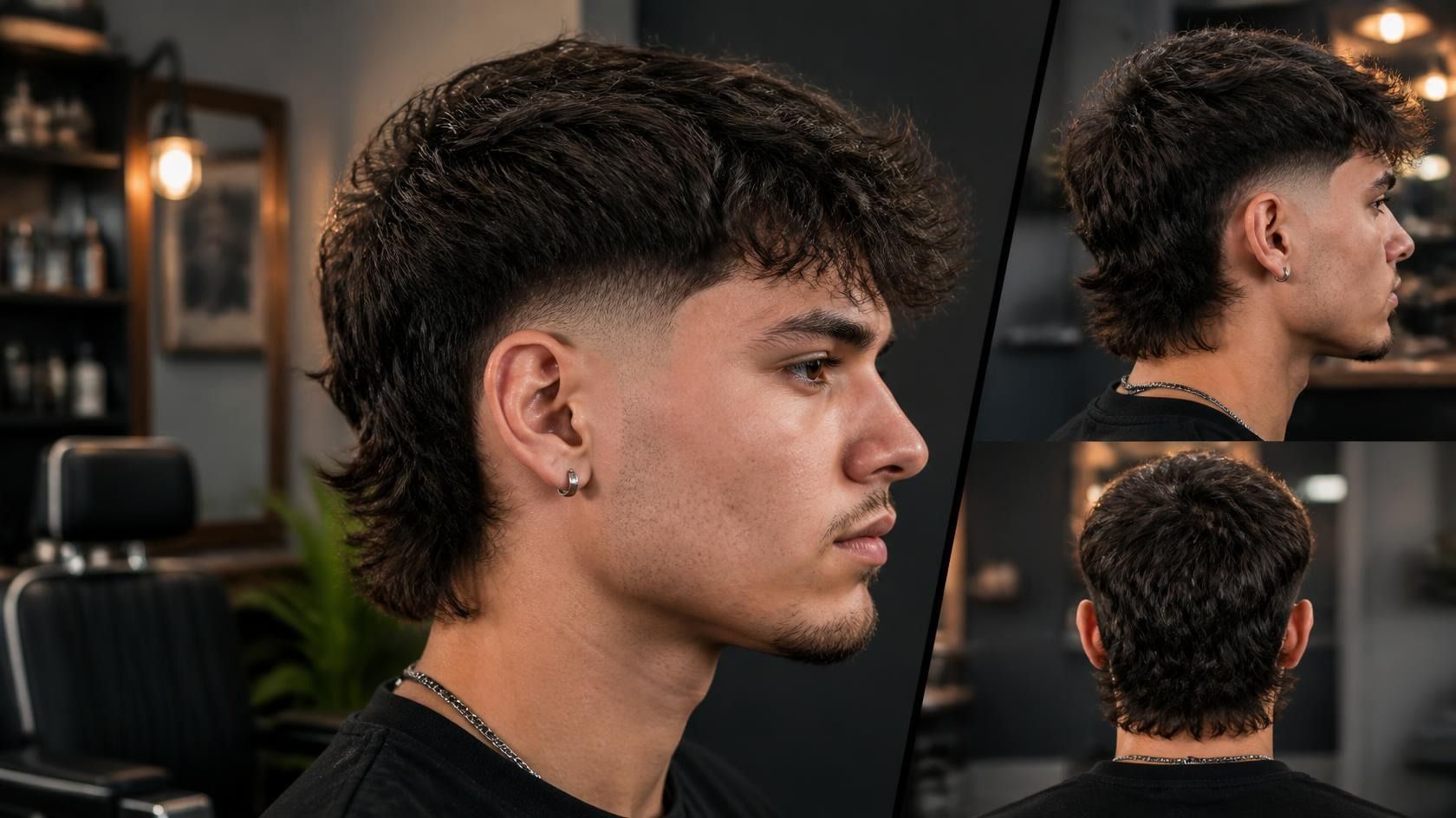
The low taper fade mullet is one of the easiest ways to wear a mullet without looking messy.
It keeps the sides clean and the back long.
That balance is why barbers see it so often now.
It works at the office, at school, and on a night out.
This guide covers the main styles, hair types, face shapes, and a simple barber script.
You’ll also get a step by step styling routine and a realistic upkeep plan.
What is a low taper fade mullet?
Quick answer: A low taper fade mullet is a mullet with short, softly blended sides that start low near the ears and neckline. The top stays textured and the back stays longer.
The “taper” is the gradual blend from short to long hair.
The “low” part means the shortest hair sits right at the hairline, not up the side of the head.
The result looks cleaner than a classic mullet.
It also looks calmer than a high contrast burst fade mullet.
The features that define the cut
A good low taper fade mullet has a few clear traits.
Here’s what to look for:
- Low fade line: The blend starts about an inch above the ear and drops down to the nape.
- Clean neckline: The edges around the ears and the back of the neck are tight and neat.
- Textured top: The top is cut in layers so it has movement and doesn’t sit flat.
- Longer back: The length at the nape is the “party” part, usually a few inches long.
- Soft connection: The top, sides, and back flow together without a hard step.
Why choose a low taper fade mullet over other mullet styles?
Most mullets ask a lot from you.
They need daily styling, frequent trims, and some confidence.
The low taper version is easier to live with.
The taper stays neat for longer than a skin fade, and it grows out without looking odd.
| Style | Fade position | Typical barber visit | Best for |
| Low taper fade mullet | Near the hairline | Every 3 to 5 weeks | Everyday wear, work settings |
| Mid fade mullet | Mid side of the head | Every 3 to 4 weeks | Moderate contrast |
| Burst fade mullet | Curved around the ear | Every 2 to 4 weeks | Bold, high contrast looks |
| Classic mullet | No fade | Every 6 to 8 weeks | Retro, relaxed looks |
If you want edge without drama, the low taper is the safest pick.
If you want a sharp, loud shape, a burst fade fits better.
Best low taper fade mullet styles and variations
There’s no single version of this cut.
These five styles cover most tastes and hair types.
The Textured Crop Mullet
This one keeps the top short and choppy, around two to four inches.
The back stays slightly longer for a subtle mullet shape.
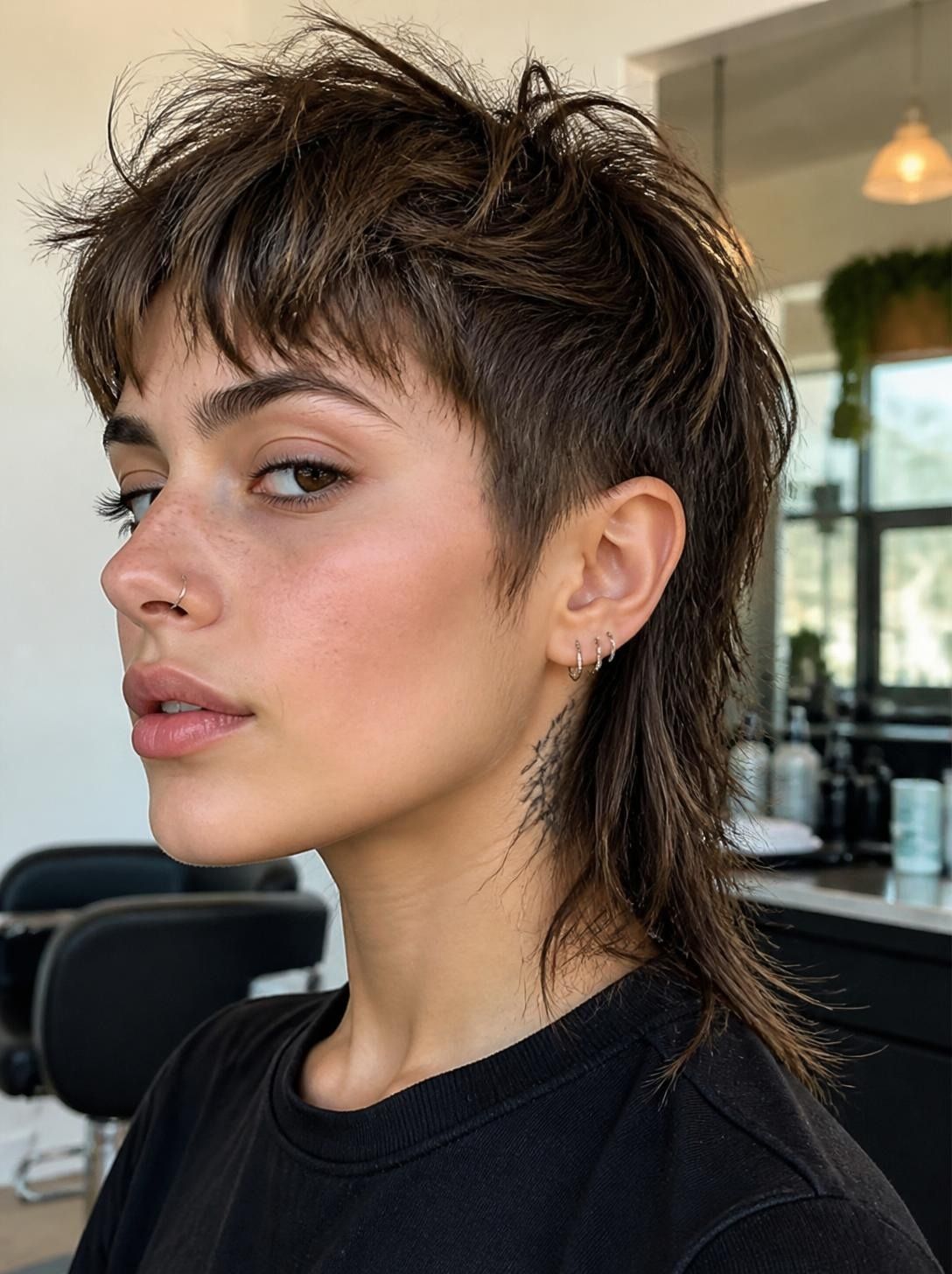
It’s a great starter cut.
Add a little matte clay and you’re done.
The curly mullet fade

Curls look great with a low taper.
The short sides control the puff, and the longer back lets curls drop and bounce.
Your barber should cut the curls dry or lightly damp.
That way you can see the true shape before any length comes off.
The slicked-back business mullet

Here the top is combed back with a light pomade or cream.
The back sits neatly behind the ears.
It looks sharp with a shirt and a jacket.
Most workplaces accept it because the sides stay tidy.
The shaggy surfer mullet
This version is looser and more relaxed.
You get heavy layers, a bit of fringe, and a messy finish.
Sea salt spray is the key product here.
The low taper keeps it from looking unkempt.
The wolf cut hybrid
A wolf cut hybrid mixes mullet length with deep, shaggy layers.
The low taper cleans the sides so the layers stand out.
It suits people with thick or wavy hair.
Fine hair can work too, but needs a light touch with layering.
Short vs. long: which length is right for you?
Length changes the whole mood of the cut.
Both options work with a low taper.
Short (2 to 4 inches on top, 3 to 5 at the back):
- Easier to style in under five minutes
- Better for school, sports, and strict dress codes
- Good first step if you’ve never had a mullet
Long (4 to 6 inches on top, 6 or more at the back):
- Stronger mullet shape and more movement
- Needs more product and more patience while growing
- Best for wavy, curly, and thick hair
Not sure which to pick?
Start with a medium back length and go longer after your second trim.
Low taper fade mullet for straight, wavy, curly, and thick hair
Hair texture decides how the cut sits and how you style it.
Here’s how to adjust the cut for yours.
Straight hair
Straight hair shows every line, so layering matters.
Ask for texture cut into the top so it doesn’t fall flat.
Use texture spray and a blow dryer for lift.
A small amount of clay helps the back keep its shape.
Wavy hair
Wavy hair is the easiest to wear in this style.
The taper removes bulk, and the waves do the rest.
Scrunch in a light cream while the hair is damp.
Let it air dry or use a diffuser.
Curly and coily hair
Curly and coily hair gains definition from the short, clean sides.
The back can stay longer and softer.
Keep it moisturized with a leave in conditioner or curl cream.
Trim the neckline often, because tight curls make regrowth look fuzzy fast.
Thick and fine hair
Thick hair needs thinning at the sides and weight removal in the layers.
The low taper does a lot of that work for you.
Fine hair needs the opposite.
Keep the top a bit longer, add short layers, and use a light powder or spray for volume.
Which face shapes suit a low taper fade mullet best?
Most face shapes can wear this cut.
The trick is adjusting the top and the back.
| Face shape | What to ask for |
| Oval | Almost anything works. Keep the length balanced. |
| Round | Add height on top and keep the sides tight to lengthen the face. |
| Square | Soften the temples with a bit of texture and a slightly longer fringe. |
| Oblong | Skip extra height. Keep the top flatter and let the sides keep some width. |
| Heart | Keep the fringe longer and let the back add weight near the jaw. |
| Diamond | Use a textured fringe to add width at the forehead. |
If you’re unsure, bring two photos to your barber.
One should show your face shape type with a similar cut.
How to ask your barber for the perfect low taper fade mullet
Most bad haircuts come from unclear instructions.
Photos help, but clear words help more.
Use this simple script:
- “I want a low taper fade mullet.”
- “Start the fade about an inch above my ears and blend it down to the neckline.”
- “Use a number one or number two at the shortest point, then blend up with scissor over comb.”
- “Keep three to five inches on top with layers for texture.”
- “Leave the back long, about five to six inches, with soft layering and no hard line.”
Show a photo of the front, the side, and the back.
Also tell your barber how much time you want to spend styling each morning.
How to style a low taper fade mullet at home, step by step
Good styling takes about five minutes once you know the routine.
You’ll need a towel, a blow dryer, and one or two products.
- Wash and towel dry. Pat your hair until it’s damp, not dripping.
- Apply a prep product. Use sea salt spray for texture or a leave in cream for curls.
- Blow dry the top. Lift the roots with your fingers and use medium heat.
- Add styling product. Warm a pea sized amount of clay or paste in your hands.
- Shape the top. Push it forward or sideways, depending on your style.
- Shape the back. Run the product through the back and twist the ends slightly.
- Finish. Use a light hairspray if you want hold all day.
Don’t overload the product.
A mullet looks best when it still moves.
How often should you trim and maintain it?
The taper is the part that fades first.
Plan a visit every 3 to 5 weeks to keep it crisp.
The back doesn’t need as much attention.
A trim every 8 to 10 weeks keeps the shape without losing length.
Here’s a simple upkeep routine:
- Every 3 to 5 weeks: Taper and neckline clean up
- Every 8 to 10 weeks: Layer and back length trim
- Weekly: Wash with a gentle shampoo and condition the ends
- Daily: Brush or finger comb, then style with light product
Hair grows roughly half an inch per month.
That means the fade will look softer after about four weeks, and that’s normal.
Low taper fade mullet FAQs
What is a low taper fade mullet?
It’s a mullet with short sides that blend low near the ears and neck, plus longer hair on the top and back.
Is a low taper fade mullet professional enough for work?
Yes, in most workplaces. Keep the sides neat and style the back so it looks intentional.
How long does hair need to be for a low taper fade mullet?
You need about three to four inches on top and a few inches at the back. Longer hair gives you more shape.
What’s the difference between a low taper and a burst fade mullet?
A low taper stays close to the hairline and looks softer. A burst fade curves around the ear and looks bolder.
Does a low taper fade mullet work on thin hair?
Yes. Ask for short layers on top and use a light volumizing product to add body.
How long does it take to grow out a low taper fade mullet?
Expect about 8 to 12 weeks for a short mullet. Long versions can take five months or more.
What products work best for this cut?
Matte clay, sea salt spray, and curl cream cover most textures. Pick the lightest option that holds your style.
Final takeaway
The low taper fade mullet gives you the mullet shape with a cleaner finish.
It suits many hair types and face shapes when you adjust the length and layers.
Bring clear photos, use the barber script above, and keep a steady trim schedule.
That’s all it takes to make it look sharp every day.
Want more taper fade guides?
If you liked this one, these guides cover similar cuts in more detail:
- Low taper fade medium length hair
- Low taper fade short hair
- Low taper fade middle part
- Mid taper fade for Asian hair
- High taper fade textured fringe
- Taper fade haircut: types, examples, and what to ask your barber

Cameron Wells is a fashion writer and style enthusiast covering fashion shows, emerging trends, designer collections, and modern style. With a strong interest in the fashion industry, Cameron creates clear, practical, and engaging content that helps readers understand seasonal trends, runway highlights, and evolving fashion movements with confidence.