

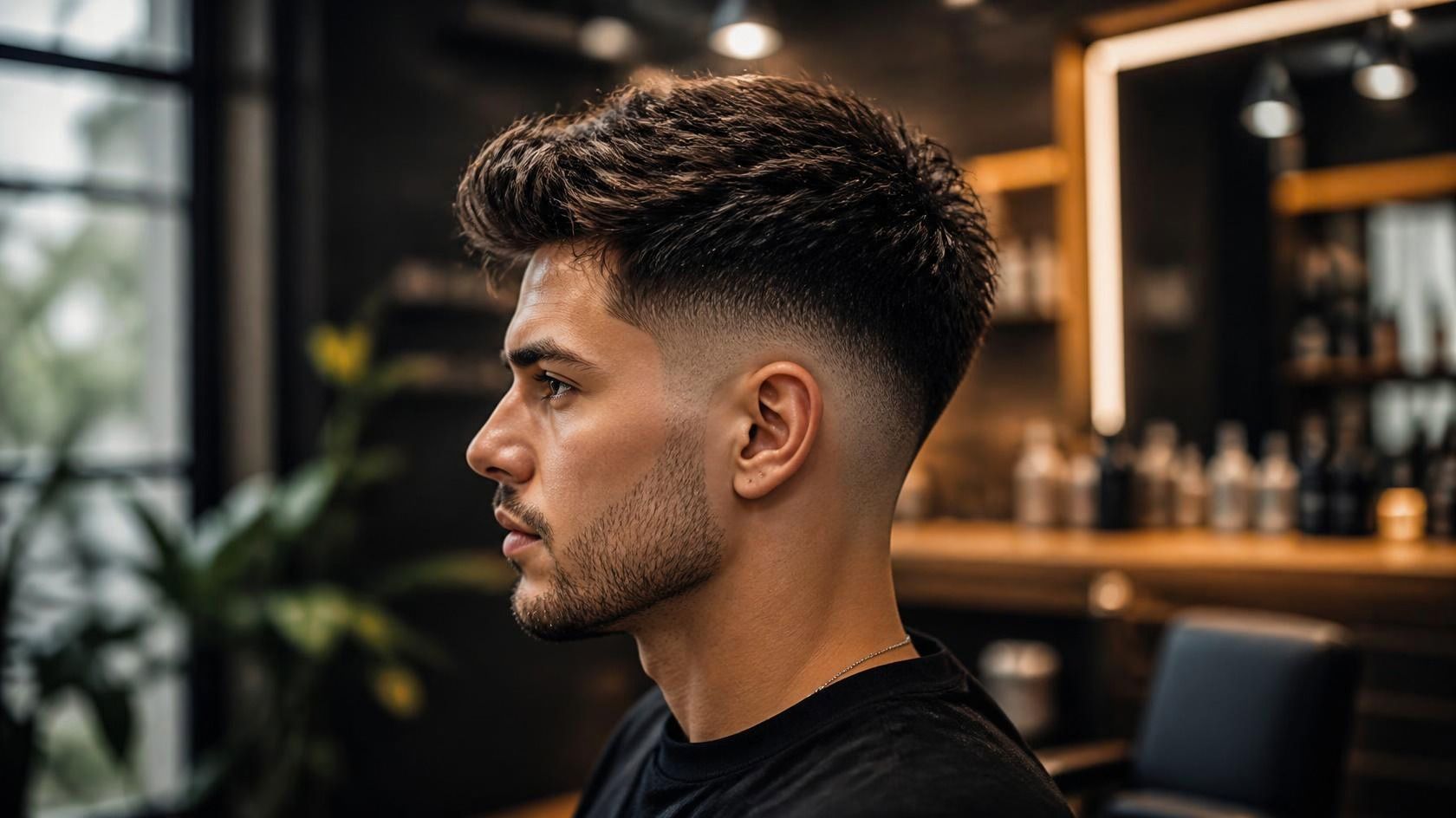
A taper fade haircut keeps the top longer and cuts the sides and back shorter in a smooth, gradual blend.
It looks clean, works in most offices, and suits almost every hair type.
The tricky part is the name.
Barbers use “taper fade” in different ways, so one shop gives you a soft taper and another gives you a bold fade.
This guide explains the types, the height options, and how to match the cut to your hair.
You’ll also get exact words to say in the chair, plus upkeep and skin care tips.
What is a taper fade?
A taper fade is a haircut where the hair gets gradually shorter toward the neckline and around the ears.
The blend is smooth, with no hard line between the long and short sections.
People like it because it looks sharp without looking harsh.
It sits between a classic scissor taper and a full skin fade.
How does a barber create the taper-fade effect?
The barber starts with clippers on a longer guard and works down the sides and back.
They switch to shorter guards step by step and blend each transition so no lines show.
Here’s the usual process:
- Pick the starting point for the blend (low, mid, or high).
- Cut the sides with a longer guard, then move to shorter ones.
- Blend with clipper over comb or the clipper lever.
- Clean the ears, sideburns, and neckline with trimmers.
- Check the result from every angle and fix any patchy spots.
Where does the taper sit, and how much hair is required?
The taper usually sits around the sideburns, behind the ears, and at the nape.
A taper fade can climb higher up the sides, depending on the height you choose.
You need about 1 to 2 inches on top for most styles.
The sides need some length too, so the barber has hair to blend.
How is a taper fade different from a taper, fade, and skin fade?
All four cuts shorten the hair toward the bottom.
The difference comes down to where the blend starts, how short it ends, and how much contrast you see.
A taper fade lands in the middle of the group.
It’s more visible than a plain taper and softer than a skin fade.
Which visible features separate the four cuts?
Use this quick guide:
- Taper: Shortens only around the sideburns and neckline. The look is subtle and classic.
- Fade: Rises higher on the sides and ends much shorter. The contrast is stronger.
- Skin fade: Goes all the way down to bare skin. It’s the sharpest of the four.
- Taper fade: Blends gradually, usually low to mid, with short but not bare sides.
Why does “taper fade” mean different things in different shops?
Many people used the words taper and fade as if they meant the same thing.
The mashup stuck, and now barbers read it in their own way.
So don’t rely on the name alone.
Tell your barber the height, the bottom length, and the neckline shape.
What are the benefits and tradeoffs of a taper fade?
A taper fade gives you a polished look with a lot of room for personal style.
It also asks for regular upkeep, and not every barber blends it well.
Here’s the honest picture before you book.
What are the practical advantages?
- Looks clean and professional in most workplaces.
- Works with short, medium, and long hair on top.
- Suits straight, wavy, curly, and coily hair.
- Grows out more gracefully than a skin fade.
- Lets you change the top style without changing the sides.
What drawbacks should you consider?
- Needs a touch up every 2 to 4 weeks to stay sharp.
- A rushed blend can look patchy or streaky.
- Higher versions can feel too bold for strict dress codes.
- Close finishes can irritate sensitive skin.
- The name is vague, so miscommunication is common.
What is the difference between a low, mid, and high taper fade?
Height is where the blend begins on the sides and back.
It’s the biggest choice you’ll make, because it changes the whole mood of the cut.
Start with your lifestyle and dress code.
Then pick the height that fits.
What is a low taper fade?
A low taper fade starts just above the ears and curves around the nape.
It’s subtle, tidy, and the safest pick for first timers.
It suits office jobs and conservative settings.
Plan on a touch up every 3 to 4 weeks.
What is a mid taper fade?
A mid taper fade starts around the middle of the sides, roughly at ear level or just above.
It adds more contrast while still looking balanced.
It’s a strong all rounder for most face shapes.
Book a refresh every 2 to 3 weeks.
What is a high taper fade?
A high taper fade starts near the temples and creates the boldest contrast.
It makes the top look fuller and the sides look cleaner.
It suits creative workplaces, angular faces, and anyone who wants a striking shape.
Expect a touch up about every 2 weeks.
Does fade height determine how short the bottom is?
No, height and bottom length are two separate choices.
Height is where the blend starts, while bottom length is how short the hair gets at the very bottom.
You can have a high taper that ends at a #2 guard.
You can also have a low taper that goes down to skin.
Which taper fade works with your hair and top style?
Hair texture matters as much as height.
The same cut can look very different on straight, wavy, curly, or fine hair.
Show a reference photo of someone with your hair type.
It saves guesswork for both of you.
How should straight or wavy hair change the cut?
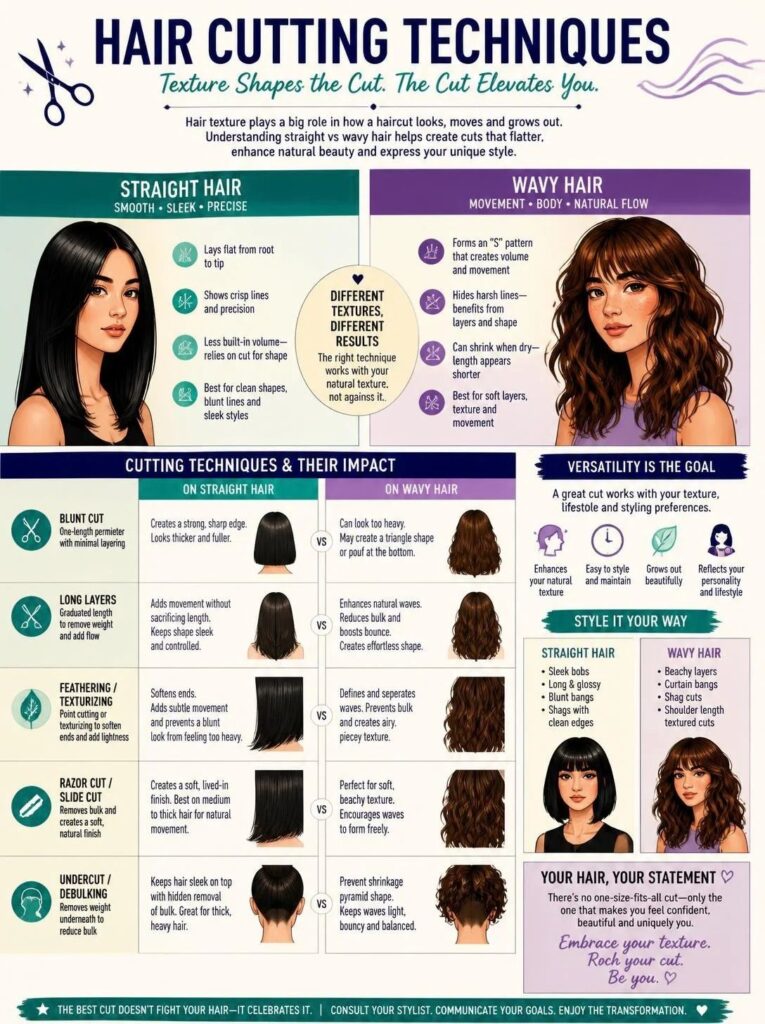
Straight hair shows every line, so the blend needs to be extra clean.
Ask for a smooth, gradual transition and a neat neckline.
Wavy hair can look bulky on the sides.
Ask the barber to remove weight, and keep enough length on top so the waves still move.
How should curly or coily hair change the cut?

Curly and coily hair often works best with a low to mid taper that keeps volume on top.
Ask the barber to cut it dry so they can see the true curl shape.
Coily hair shrinks when it dries.
Tell your barber the length you want after shrinkage, not stretched out.
What if the hair is fine, thinning, or the hairline is uneven?

For fine or thinning hair, go low and keep the blend gradual.
Skip skin level finishes, because they can make thin areas stand out.
For an uneven hairline, ask the barber to follow your natural line.
A razor sharp lineup can highlight gaps, so ask for a softer edge.
Which top styles pair with a taper fade?
- Textured crop or short fringe
- Quiff or pompadour
- Side part with a clean comb over
- Curls or twists on top
- Afro with a shaped edge
- Buzz cut for a low effort version
How should face, head shape, and hairline affect the taper?
Your face shape gives you a starting point, not a strict rule.
The taper helps frame the face, so small changes make a visible difference.
Use these as guides:
- Round face: A mid to high taper adds height and structure.
- Square face: A low to mid taper softens strong angles.
- Long face: A low taper keeps the sides from stretching the face further.
- Oval face: Most heights work well.
- Heart shaped face: A low to mid taper keeps attention off a wider forehead.
Which design controls change the silhouette?

- Fade height: Controls how much contrast you see.
- Bottom length: Decides how soft or sharp the finish looks.
- Neckline: Squared, rounded, or tapered, each gives a different back view.
- Sideburns: Shorter ones look sharp, longer ones look classic.
- Temple edge: A lineup adds definition, while a natural edge looks softer.
- Top length: More length adds height and balance.
How can you choose a taper fade quickly?
Answer these four questions, and you’ll land on a good choice fast.
- Do you need a conservative look for work? Pick a low taper.
- Do you want a balanced, modern shape? Pick a mid taper.
- Do you want strong contrast? Pick a high taper.
- Are you unsure? Start low and go higher at the next visit.
Going shorter later is easy.
Growing it back isn’t.
How do you ask a barber for a taper fade?
Clear details beat fancy terms.
Barbers don’t need perfect vocabulary, they need specifics.
Bring a photo if you can.
It’s the fastest way to get on the same page.
What five details should you confirm before the cut starts?
- Height: Low, mid, or high.
- Bottom length: Skin, a #1, or a #2.
- Top length and style: For example, about 2 inches with a textured finish.
- Neckline: Squared, rounded, or tapered.
- Edge up: Sharp lineup or a natural edge.
What can you say word for word?
Here are scripts you can use or adjust:
- Safe and professional: “Low taper fade starting at the ears, about 2 inches on top, tapered neckline.”
- More contrast: “Mid taper fade with a #1 at the bottom, textured on top, natural edge.”
- Thinning hair: “Low taper fade, please keep the blend really gradual and avoid a hard line.”
- Not sure: “I want a taper fade, but I’m not sure on height. Can you suggest one for my hair and face shape?”
How do you style and maintain a taper fade?
A good taper fade is easy to live with.
The top needs a bit of daily care, and the sides need regular trims.
Keep your routine simple.
Consistency matters more than fancy products.
What is the daily styling routine?

- Wash and towel dry your hair.
- Add a small amount of product: matte clay for texture, cream for curls, or pomade for shine.
- Shape the top with your fingers or a comb.
- Use a light brush on the sides to keep them smooth.
Use less product than you think you need.
You can always add more.
How often does a taper fade need a touch-up?
Here’s a rough schedule:
- Low taper: Every 3 to 4 weeks.
- Mid taper: Every 2 to 3 weeks.
- High taper: Every 2 weeks.
Book your next visit before you leave the chair.
It keeps the cut sharp and saves you from last minute scrambles.
What scalp and skin issues matter with a close taper fade?
Short sides expose more of your scalp and the skin around your ears and neck.
That can mean sunburn, dryness, razor bumps, or irritation after a close cut.
Use sunscreen on exposed areas.
Moisturize if your skin feels tight or flaky.
When should you avoid or modify a skin-level finish?
Skip or soften a skin level finish if you have any of these:
- Ingrown hairs or razor bumps
- Active irritation, folliculitis, or a sunburn
- A flare of eczema or psoriasis on the scalp
Ask for a #1 or #2 at the bottom instead.
If bumps or irritation keep coming back, check with a dermatologist.
Frequently asked questions
Is a taper fade the same as a fade?
Not exactly. A taper fade is usually softer and blends more gradually than a standard fade.
How long should my hair be on top?
About 1 to 2 inches works for most styles. You can go longer for a quiff or curls.
Which taper fade is best for beginners?
A low taper fade. It’s subtle, easy to grow out, and works in most settings.
Can I get a taper fade with curly or coily hair?
Yes. Ask for a low to mid taper on dry hair, and keep the volume on top.
What taper fade is best for thinning hair?
A low taper with a gradual blend. Avoid skin level sides and harsh lineups.
How much does a taper fade cost?
Prices vary by city and barber, so check with your local shop before you book.
Does a taper fade work with a beard?
Yes. Ask the barber to blend the sideburns into the beard for a smooth finish.
How do I stop my taper fade from looking patchy?
Go to a barber who blends carefully, and book regular touch ups. Bring a reference photo.
Final thoughts
A taper fade haircut works because you can tune it.
Height, bottom length, and top style let you build a cut that fits your hair and your day.
Be clear in the chair, and don’t rely on the name alone.
Start low if you’re unsure, then adjust as you learn what you like.
Want more taper fade guides?
Keep exploring with these related reads:
- High taper fade Afro: styles, barber script, and maintenance guide
- High taper fade textured fringe: who it suits and how to style it
- Low taper fade medium length hair: 12 styles and a barber guide
- Mid taper fade for Asian hair: 10 styles and maintenance tips

Cameron Wells is a fashion writer and style enthusiast covering fashion shows, emerging trends, designer collections, and modern style. With a strong interest in the fashion industry, Cameron creates clear, practical, and engaging content that helps readers understand seasonal trends, runway highlights, and evolving fashion movements with confidence.